

Kiev (Ucrania), 1914 – San Juan (Puerto Rico), 1997
By Ángel G. Quintero Rivera
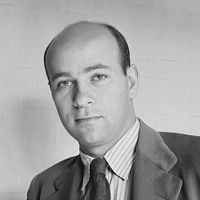
Photographer, filmmaker, caricaturist, graphic designer, and “classical” composer, descended from Ukrainian Jews who emigrated to the United States in 1923, Jack Delano spent his formative years in Philadelphia and New York. His childhood and youth combined the calm family life of ancestral cultural traditions with rapid social change. The metropolises dramatized the conditions under which this new country was forged: a booming economy increasingly monopolized and based on competition for individual enrichment, against a deeply rooted democratic ideology founded on the “common citizen.” In response to the Great Depression crisis, President Franklin Delano Roosevelt devised the so-called “New Deal” programs to seek social consensus that would enable a different kind of coexistence.
Jack Delano’s art is a product of the New Deal: sharp social tensions and struggles for democratic resolution. For this reason, it is no coincidence that just as he began his public professional life, the immigrant Jasha Ovcharov voluntarily changed his name to align with his new identity. He adopted Delano, the maternal surname of the then-American president, and Jack, a name traditionally designating the common man. It is also no coincidence that he chose to begin his professional life with documentary photography. In the 1930s, photography moved out of the controlled studio environment to the reality of the streets. One of the most important movements in this development was linked to the New Deal. Under the direction of sociologist Roy Stryker, a group of photographers from the Farm Security Administration’s (FSA) historical documentation division was sent across the United States to document the daily lives of the common American. The project aimed to combine art, humanities, and social sciences in a work directed at influencing public policy and the country’s conception. Each photographer prepared for their assignments with readings on economics, history, and anthropology of the region they would “document,” without losing sight of their role as artists.
The Pleasant Discovery of Puerto Rico
As an FSA photographer, Delano visited Puerto Rico in 1941 and returned five years later to settle there. In the mid-1940s, the spirit of the New Deal was fading in the United States, while Luis Muñoz Marín’s policies turned Puerto Rico into the last stronghold of that political-social philosophy. Delano immediately identified with the possibilities of that transformative project and collaborated in establishing the Community Education Division, which sought to integrate various audiovisual arts (posters, illustrated pamphlets, photographs, film, etc.) into a social orientation project. In this project, Delano shifted his primary focus to film, directing and producing many of the first Latin American educational documentaries. The film Los peloteros (1951), in particular, is considered on par with the best cinematography of the Italian realism school at the time. Later, he produced two animated films: Sabios árboles, mágicos árboles (ecologist-inspired) in the 1980s and Los aguinaldos del infante, a children’s Christmas story, in the 1990s.
His first musical compositions arose within his work as a filmmaker. He combined solid training in the “classical” tradition, electroacoustic experiments (considered among the first worldwide), with themes, harmonies, and rhythms of the musical language of the common Puerto Rican, protagonist of his films. The Organization of American States (OAS) was correct in defining Delano as a Puerto Rican composer in its Composers of the Americas catalog. His development as a composer was always linked to the country’s cultural institutions: the Symphony Orchestra, Ballets of San Juan, public radio and television, etc. His music is characterized by integrating deep intimate lyricism with sharp social awareness. Notable works include Sinfonietta for strings (1984), Concertino for trumpet (1965), the ballet La bruja de Loíza (1956) based on bomba rhythms, the symphonic cantata Burundanga (1992) on a poem by Luis Palés Matos, and the Sonata for viola (or clarinet) and piano (1953), which integrates “classical” language with the varied historical roots of Puerto Rican sound: Afro-bomba, peasant music, and proletarian plena.
Between 1955 and 1963, Delano contributed caricatures to the newspaper The Island Times. Until then, press caricatures focused on praise or criticism of prominent public figures. Delano helped transform the genre by mainly addressing the fortunes and misfortunes of the common citizen. His caricatures humorously present a series of concerns about the twists the modernization project took—a project he had participated in—anticipating what would later be called “postmodern sensibilities.”
From 1969, when he retired from public service, he dedicated himself to book illustration and design, especially for children and young people. Along with his wife Irene, a great graphic artist, they designed and illustrated the instructive tale Las nuevas ropas del emperador (1971), setting its plot in the streets of San Juan. Together, they designed, illustrated, researched, and wrote the book En busca del Maestro Rafael Cordero, about a mulatto tobacconist who organized one of the country’s first schools, where he taught children of all social classes for free. Finally, they collaborated with photos and designs in folklorist Teodoro Vidal’s books on Puerto Rican popular arts, especially the saints’ carvings and vejigante masks.
The Thousand Faces of a People
In 1990, Delano produced a book with his 1946 photographs titled De San Juan a Ponce en el tren. His ideas, passions, and utopias are transparent. The train is seen less from its machinery and “functions” and more through its workers and passengers: the producers and consumers, a central relational pair in New Deal philosophy. It is significant that the images of a “modern” family of recent origin, led by a dark-skinned woman, weave the visual discourse of the journey and the book.
Delano’s photographs from the 1940s remained scattered across various publications for years; among the most important was the book The People of Puerto Rico (1956) by a group of anthropologists including Sidney Mintz and Eric Wolf. In the early 1980s, he photographed similar places and situations, scrutinizing the changes that had taken place in Puerto Rico over forty years. He was surprised not only by changes but also by continuities, especially in how people treated each other and in the simultaneously intimate and social aspect of poses and gestures.
This project culminated in his book Puerto Rico mío. Both for its photographic gems and its way of relating them to each other, it is simultaneously one of the great books in the history of photographic art and one of the deepest visual analyses of a culture undergoing social change. It “portrays,” like no other, the modernization process with its important achievements, ambivalent paths, and troubling missteps. His critical-constructive eye, which prioritized joy in his faith in life, culture, and education over denunciation, permeates his other published books: the compilation of his caricatures Así es la vida (1996), the photographic poem El día que el pueblo se despidió de Muñoz (1987), and, in a particularly enjoyable and profound way, his autobiography Photographic Memories, which was published a few days before his death.
His art, in such varied facets, emphasizes the dignity of sharing the simple, within the deepest democratic sense; but immediately identifying himself as a subject of that sharing, his work does not escape utopia: it expresses what he wished we could be. His art—realistic, imaginative, and free—is also, in the best sense, committed. An immigrant—like many Puerto Ricans and Latin Americans—he fully understood the dynamic and fundamentally relational character of the national phenomenon. When asked if he considered himself Puerto Rican, he decisively and firmly answered shortly before his death: “I will be, as long as you want me to be.”
