
Pesquisar
Close this search box.

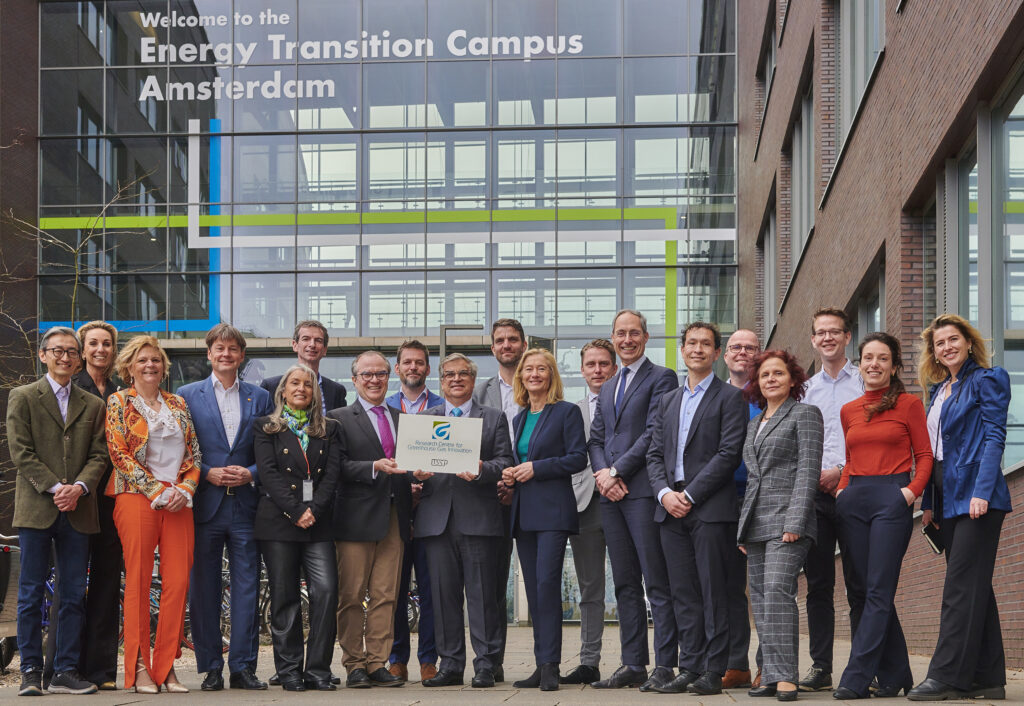
Nova parceria entre RCGI e ETCA na Holanda

O RCGI, filiado à Universidade de São Paulo, agora faz parte do ecossistema Energy Transition Campus Amsterdam – ETCA

A importância da adesão do RCGI à ETCA foi hoje sublinhada pela presença da ministra holandesa de Assuntos Económicos e da Política Climática – Micky Adriaansens – e da presidente da ChemistryNL, Jacqueline Vaessen. Isto mostra o compromisso partilhado com a sustentabilidade ambiental e o papel que colaborações como esta desempenham na abordagem dos desafios globais.
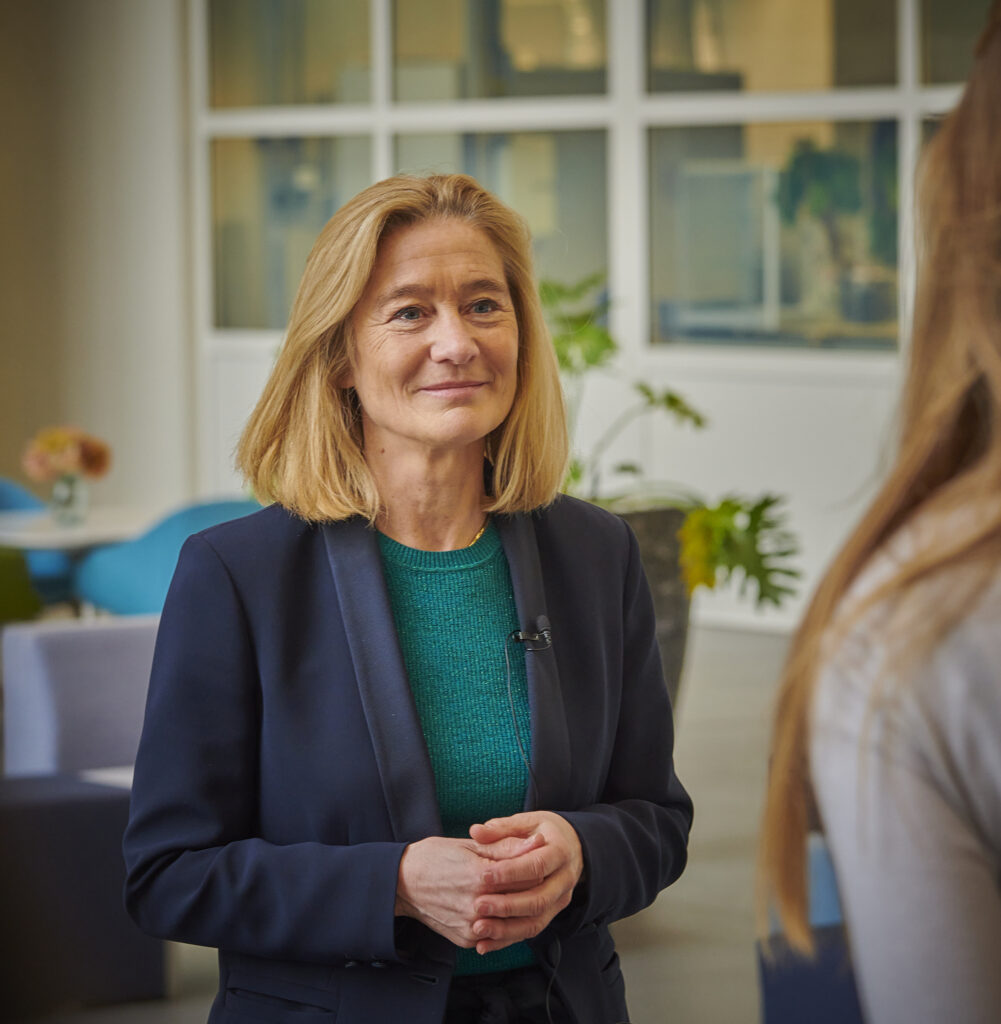
Micky Adriaansens, ministra holandesa de Assuntos Económicos e de Política Climática.

A ministra assinou um acordo em dezembro passado com o governo brasileiro para intensificar colaborações em pesquisa e inovação no campo da economia de base biológica e tecnologias para reduzir as emissões de gases de efeito estufa.
A ministra Micky Adriaansens, DE Assuntos Econômicos e Política Climática, disse: “É realmente promissor ver como nossa parceria com o Brasil, particularmente por meio do Centro de Pesquisa para Inovação em Gases de Efeito Estufa, tem o potencial de causar um impacto significativo em nossa busca por um futuro mais verde. É crucial que empresas como a Shell invistam em investigação e desenvolvimento. Esta colaboração internacional é um exemplo fantástico disso. Instituições de conhecimento e empresas estão a unir forças para trabalhar em soluções tecnológicas sustentáveis ​​para os nossos desafios de sustentabilidade. Colaborações como esta mostram como é importante trabalhar juntos globalmente para enfrentar os grandes desafios que temos pela frente.”
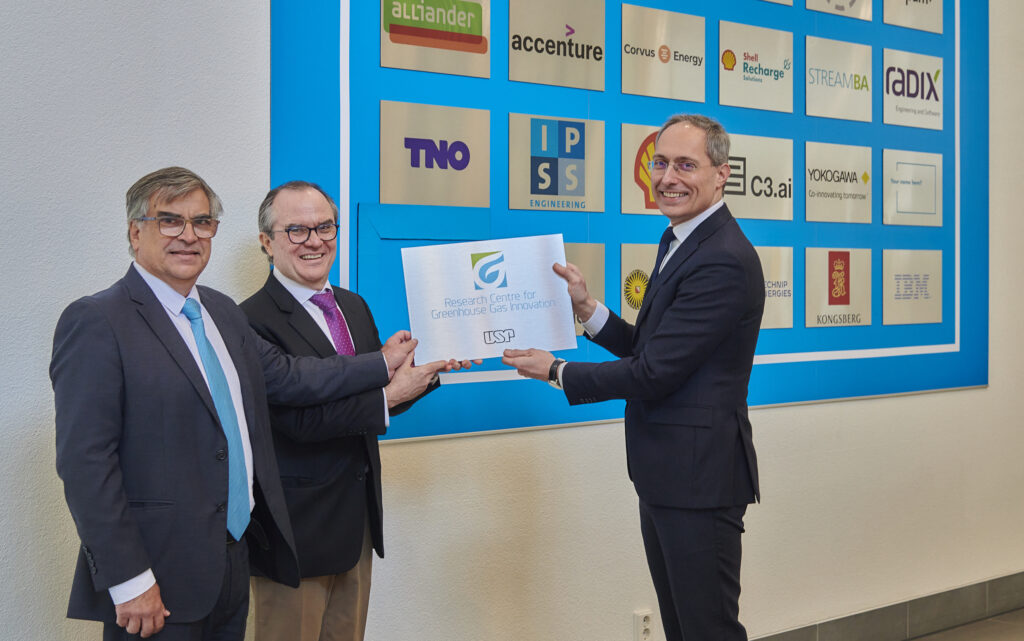

O novo membro da ETCA, o RCGI, está na vanguarda do compromisso do Brasil com a sustentabilidade ambiental, envolvendo 600 pesquisadores em todo o mundo na mesma missão de reduzir as emissões de gases de efeito estufa.

A estratégia do RCGI consiste em 3 pilares principais:
1. Pesquisa inovadora: O RCGI amplia os limites da redução de gases de efeito estufa através da realização de pesquisas pioneiras.
2. Desenvolvimento de soluções: O RCGI transforma ativamente as suas descobertas em soluções viáveis, desde inovações tecnológicas até recomendações políticas e percepção e envolvimento do público.
3. Disseminação de Conhecimento: O RCGI está comprometido em compartilhar seu conhecimento e descobertas tanto com a comunidade científica quanto com o público em geral.

O RCGI já mantém conexões contínuas na Holanda com institutos renomados como o TNO e a Delft University of Technology e se concentra especificamente em soluções baseadas na natureza; captura, utilização e armazenamento de carbono; hidrogênio; biocombustíveis; mitigação das emissões de gases com efeito de estufa e advocacia que estão totalmente alinhadas com os temas principais da ETCA.
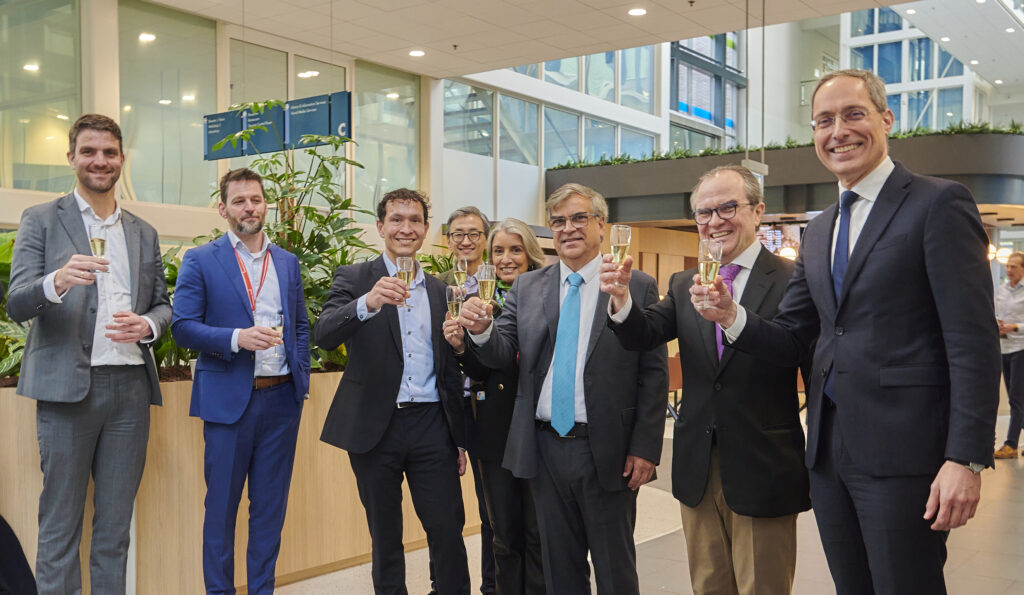

Além disso, o RCGI sediará duas plantas piloto inovadoras no campus da USP no Brasil, ambas com lançamento previsto para o segundo semestre de 2024. A primeira planta é focada na produção de hidrogênio sustentável a partir do etanol, e a segunda planta é dedicada à produção de metanol verde a partir de CO2 biogênico, contribuindo para o avanço de soluções de energia limpa.
A nova parceria entre o RCGI e a ETCA proporcionará maior acesso às empresas e organizações de pesquisa holandesas para colaborarem com o RCGI. Como tal, o RCGI torna-se verdadeiramente um programa de parceria Brasil-Holanda.


THURSDAY, 7 NOVEMBER

SHORT ORAL SESSION F - 11h30

THURSDAY, 9 NOVEMBER

SHORT ORAL SESSION F - 14h00

EMS Alberto Fossa – Maurício Salles

Andre Luis Ferreira MarquesSolar energy and GHG: a Data Science case study in the Manaus-Parintins Axle – EMS126
João Fegadolli Nunes da SilvaAssessment of Biomethane Potential for Urban Agriculture – EMS127
Letícia Souza de JesusEnhancing Predictive Maintenance and Diagnostic Techniques for Stator Fault Detection Using Mathematical Models and Python Simulations – EMS128
Stevan Henrique Ramon de GóesUsing Artificial Intelligence for Image Analysis in Monitoring the Condition of Wind Generator Blades – EMS129

BECCUS André Dourado – Marcos Buckeridge

Thiago Vasconcelos de Barros FerrazEnabling ethanol electro-oxidation in seawater-like electrolytes for energy conversion and CO2
mitigation
Paula Barione PerroniStainless Steel as Catalyst for Ethanol Oxidation Reaction
Naiza Vilas BôasThe electro-oxidation of ethanol under oscillatory regime on platinum-tin electrodes
Murilo Gomes de OliveiraStudy of Ethanol Electrooxidation in Oscillatory Regime for Gaining Mechanistic Insights.
Marilin Mariano dos SantosPerspectives of BECCUS technologies in Brazilian sugarcane sector
Leandro Francisco de OliveiraHormonal signaling network can contribute to design strategies to improve sugarcane growth and yield
André Henrique Baraldi DoruadoLignin Oxidation on CuO: (Electro)chemical Approaches
Gustavo Charles Peixoto de OliveiraComputational Engineering Approaches for Geologic Carbon Storage Site Qualification in the Brazilian
Gabriel Godinho CapistranoCarbon Capture Utilization and Sequestration in Basaltic Rocks from the Serra Geral Formation: A Petrographic Characterization Before and after the Co2 Injection
Carolina S CostaSolvent-Free Hydrogenation of Succinic Acid into Tetrahydrofuran

GHG Renato Picelli – Marcelo Sekler

Fernanda de Marco de SouzaGHG emissions in wastewater treatment plants: nitrous oxide and the importance of data collection and monitoring
Felipe Silva MaffeiDesign of smart labyrinth seals for mitigation of GHG emissions in pneumatic machines
Emiio carlos Nelli SilvaDesign of smart labyrinth seals for mitigation of GHG emissions in pneumatic machines (compressors and turbines)
Renato PicelliEfficient Turbulent Fluid-Structure Topology Optimization with Smooth Boundaries Using Sequential Integer Linear Programming
Diego Silva PradoVirtual Analysis Tools for Enhancing Residence Time and Bubble Characteristics in Fluidized Beds
Jurandir Itizo YanagiharaDesign Optimization and Experimental Analysis of Supercritical CO2 Centrifugal Compressors– GHG2013
Daniel Jonas DezanMetamodel-Assisted Structural Design Optimization of CO2 Centrifugal Compressor – CCUS215
Maurício Silva FerreiraExperimental setup for testing supercritical CO2 centrifugal compressors – GHG2014

CCUS Lucy Gomes Sant Anna – Renato Gonçalves

Mariana CiottaCreating an offshore CCS HUB: challenges and opportunities
Marielle de OliveiraDesign Methodology for Gas-Liquid Separators in Methanol Production from CO2
Daniela Costa 178The Importance of Reservoir Rocks and Fluids Characterization for Ccs Projects: An Experimental Study With Brazilian Rocks and Fluids
Diego Miranda de Souza Costa 179Evaluation of the influence of the use of different amino acids and superbases in the preparation of deep eutectic solvents for CO2 capture
Aleksandro Kirch 180Potential of Clay Minerals for CO2 Capture and Storage: Advances from an Atomistic Perspective
Allan Cavalari Telles Ferreira 181Challenges to evaluate CO2 storage potential in Saline Aquifers in Brazil
Jose Mateo Martinez SaavedraStudying the kinetics of CO2 hydrogenation into methanol over commercial copper-based catalysts
Leandro Augusto FaustinoFine-tuning of electrocatalyst/electrolyte interface for efficient reduction of CO2 and N2 towards added-value chemicals

THURSDAY, 9 NOVEMBER

SHORT ORAL SESSION E - 10h10

ETE Virginia Parente – Suani Coelho

Thiago Giancoli BertoGreen and Yellow Hydrogen: from the federal fiscal war to global value chains – ETE119
Melodie Kern Sarubo Dorth SinegaliaMethodology Proposal for Control Point Surveys: Considerations in the Context of Remote Forest Monitoring with Emphasis on Carbon Stock – ETE120
Mateus CastagnetCarbon Footprint Reduction through the Replacement of LPG with Biodigesters: A Case Study – ETE121
Leonardo de FreitasEconomic viability of hydrogen – ETE122
Lauron ArendBusiness Models for the Brazilian Natural Gas Market in Times of Energy Transition and National Deregulation – ETE123
Jose Roberto MoreiraNew Technologies for Cars – Costs, Impacts and Advantages – ETE101
Jhonathan Fernandes Torres de SouzaHow much would the energy transition cost for steel and cement industries in Brazil? – ETE124
Felipe Nasser ArmondThe Crucial Role of Energy Storage Technologies in the Global Energy Transition – ETE125

CCUS Lucy Gomes Sant Anna – Pedro Vidinha

Leonardo Domenico De AngelisMechanistic insights of the plasmon-enhanced CO2 reduction reaction
Lorenzo Kesikowski FolladorScreening of Ionic Liquids for CO2RR using Molecular Dynamics
Louise Hase GraciosoUtilizing Microalgae for Sustainable Biorefinery: A Path to Carbon Mitigation and Bioeconomic Prosperity
Luana do Nascimento Rocha de PaulaEffect of the catalyst copper loading on the ethanol production in the CO2 hydrogenation over Cu-UiO-67
Lucas Rodrigues da SilvaSynthesis and Characterization of CuFeZn-based Materials as Catalysts for CO2 Hydrogenation
Maitê Lippel GotheScale up of a ReOx/TiO2 catalyst for the CO2 hydrogenation to methanol
Primaggio Silva MantoviControlling the Role of Water with Ionic Liquids in CO2RR Aiming C2+ Products
Renato Vitalino GonçalvesGreen Hydrogen Production via Photo(electro)catalysis: BiVO4 as case of study

SRS Edmilson M. dos Santos – Karen Mascarenhas

Dindara SIlva GalvãoFuture literacy towards climate changes using theater of the oppressed – SRS205
Cylon LiawCCUS standardization mapping – The steps towards this strategic tool – SRS206
Celso da Silveira CacholaGeospatial Analysis and Clustering of Green Hydrogen Production and Consumption for Greenhouse Gas Emission Mitigation: A Case Study of Brazil – SRS207
André dos Santos Alonso PereiraScience Diplomacy and the Sustainable Development Goals: How RCGI may use it – SRS208
Alberto J. FossaStandardization of Carbon Dioxide Capture, Transportation, Utilization and Storage (CCUS) – Recent developments at ABNT and ISO – SRS209
Maxiane CardosoBrazilian climate targets and the analysis of their alignment with Nationally Determined Contributions (NDCs) – SRS211
Alexandre de Barros GalloGHG mitigation through energy management – Current standardization approaches – SRS212

GHG Renato Picelli – Guenther Krieger Filho

Glycon Pena de Souza BarrosDevelopment of labyrinth seal applied to pneumatic machines using the concept of intelligent materials
to minimize leakage
Rômulo Luz CortezCompressor’s Impeller Designs: Topology Optimization for Resonance Mitigation
Shahin RanjbarzadehMulti-objective function topology optimization design of labyrinth seal
Elóy Esteves GasparinGas-like behavior constraint for s-CO2 Compression Train Optimization
Alberto Lemos DuranTopology optimization method applied to the design of compressor impellers for supercritical CO2
José Guedes Fernandes NetoSoil carbon stocks dynamics during tropical forest restoration in Atlantic Forest
Jonatan Ismael EisermannLarge eddy simulation of a dimethyl ether turbulent jet diffusion flame
João Baptista Dias MoreiraInteger Variable Topology Optimization applied to Full Waveform Inversion for salt reconstruction
Icaro Amorim de CarvalhoTopology optimisation of a rotor subjected to a transient and compressible fluid flow
Teresa Duarte LannaLi separation from production water using ZIF-67 – ETE188

WEDNESDAY, 8 NOVEMBER

SHORT ORAL SESSION D - 15h20

NBS Carlos Cerri – Maurício Cherubin

Bruna Emanuele Schiebelbein

Danielle Mendes Thame Denny 2

Status of soil health in agricultural soils in Brazil using the Soil Management Assessment Framework

Nature-based solutions: Sustainable development of Latin America

Mara Regina MoitinhoSpectral signature of synthetic Fe-rich nanoparticle in an agricultural soil
Marcelo Laranjeira PimentelIntegrated crop-livestock systems and well-managed pasture promote biological activity, aggregates stability and the increase of soil organic carbon in southern Amazon, Brazil
Márcio José TeixeiraDeforestation Patterns Evolution of the Amazon Basin from 1985 to 2021
Melida del Pilar Anzola RojasPotential of Hydrogen Production in Aa Microbial Electrolysis Cell From Sugarcane Vinnasse
Victória Santos SouzaNature based solution: cover crops in the Cerrado and their role in greenhouse gas emissions and soil carbon distribution
Wanderlei BieluczykOn-field measurements of greenhouse gas fluxes in Brazilian low-carbon agriculture: a meta-analysis and critical insights
Danielle Mendes Thame DenyConnecting carbon farming in Brazil and its implications for food (in)security in África
Dener OliveiraMake the data available: an analysis of the soil C research for the Brazilian Cerrado
João Luis Nunes CarvalhoLand use intensification as a strategy to increase soil carbon storage and stabilization in tropical conditions

PS Maurício Salles – Renato Monaro

Antônio Carlos Bastos de GodoiCyber Defense System for Smart Grid Communications – PS130
Beatriz Aline Riga RochaInvestigation of Ni and Cu doping effects on the sintering and proton conducting behavior of BaZr0.7Ce0.2Y0.1O3-δ – PS131
Demetrio Cornilios ZachariadisWind potential improvement through the study and mitigation of generation deviations and failures – PS132
Carlos Andre Persiani FilhoUAV-Assisted Fault Detection in Electrical Distribution Systems – PS133
Eduardo Coelho Marques da CostaParameter estimation of power transmission systems by using least square methods and optimum filtering theory – PS134
Emanuel Percinio Gonçalves de OliveiraMethodology for Obtaining an Intelligent Tool for Classifying Faults in Overhead and Underground Distribution Lines with High Penetration of Wind Sources Interfaced by Inverters – PS135
Enrique Adalberto Paredes SalazarUnderstanding Electrocatalytic Reactions trough Microkinetic Modeling Approaches – PS136
Fátima Eduarda do Nascimento MoraisMethods for the analysis of resonance in distribution systems with high DER penetration – PS137
Felipe Berto OmettoCatalysts for hydrogen production in ethanol-fed SOEC systems – PS138
Giancarlo Carvalho PrezottoMethods for analysis and mitigation of resonances in wind farms – PS201

CCUS Cristina Fernanda Alves Rodrigues – Pedro Vidinha

Ana Carolina Borges SilvaParticle resolved CFD simulations of fixed bed reactors in co2 hydrogenation
Priscilla J ZambiaziEngineering porous materials MOFs-Based – Technological Applications and Dynamic Crystals
Andressa Mota Lima 170Assessment of Non-Aqueous Electrolytes for CO2 Electro-reduction via updated Walden Plot
Bryan Alberto Laura Larico 171Development of a technical catalyst for the conversion of CO2 into methanol
Alberto Riera JLattice Boltzmann methods applied to the solution of Digital Rock problems
Alvaro David Torrez BaptistaGeochemical CO2-basaltic rocks interactions: a first principles approach
Lais Reis BorgesEvaluation of intrinsic catalytic activity of rhenium catalysts at CO2 hydrogenation in a fixed bed reactor during a scale-up process
Lázara Hernández FerrerNH3 Production via N2 electroreduction in Water-in-Salt Electrolyte with a MOF Catalyst

GHG Renato Picelli – Fernando Sacomano

Enzo SampronhaModeling of Temperature-Swing Adsorption in Fluidized Bed Systems for CO2 Capture
Caroline Silva MatosExperimental investigations of Brazilian oxygen carriers for the chemical looping combustion
technology: from micro- to macroscale
Lucas Neves Braga Soares RibeiroLabyrinth Diode Designed by Topology Optimization of Binary Structures using Laminar Flow and Real Gas Properties with Experimental Validation
Juliano Fagundes GonçalvesSolid Oxide Fuel Cell (SOFC) channel design using the Topology Optimization Method
Marcel Augusto Alvarenga ViegasDigital Transformation Process Based on Automation and Data Service: a case study in sustainability
projects
Thomás C. MirandaUse of Automated Low-Cost Sensors for Methane (Ch4) Emissions Monitoring
Lucas O. SiqueiraTopology optimization of Turbulent 2D swirl Fluid-Structure Interaction Problems Applied to Labyrinth
Seals Design Considering Natural Frequency Constraints
Lucas Ramos Deliberali BarbosaDecarbonization policies in the industrial sector: a systematic review
Yuri Souza BeleliOptimization of a continuous temperature swing adsorption system for gases originated from biomass
combustion

WEDNESDAY, 8 NOVEMBER

SHORT ORAL SESSION C - 11h30

EnvSG Suani Coelho – Edmilson Moutinho dos Santos

Alberto Torres Riera JuniorA Machine Learning Force Field for Boric Acid and Water – EnvSG108
Ana Paula Alves DiboAddressing Cumulative Impact Assessment into the planning and development of offshore wind farms (…) – EnvSG109
Alexander TurraAssessment of the environmental and social impact of offshore wind energy (“EnvSoOff”) – EnvSG117
Andrea Carolina Gutierrez GomezMunicipal Solid Waste Potential for Hydrogen Production in the Sao Paulo State – EnvSG110
Carlos Alberto Martins JuniorAdsorption study of H3BO3 in graphene: a computational approach – EnvSG111
Daniela Higgin AmaralPotential for electricity generation from sustainable forest management residues in Brazilian isolated systems – EnvSG112
Geovanna Paulino PereiraWinds of the Future: Multidimensional Assessment of Socio-Environmental Impacts in Offshore Wind Farms – EnvSG113
Guilherme de Aquino Fernandes SousaHow far has the low-carbon energy transition contributed to energy poverty and social exclusion? – EnvSG114
Ricardo Bastos CalabreseIntegration Of Photovoltaic Energy In Urban Planning – Promoting resilience and decarbonization (…) – EnvSG115
Thalles Moreira de OliveiraOptimization study of blue hydrogen distribution as an alternative fuel to diesel in the State of São Paulo – EnvSG116
Vanessa Pecora GarcilassoLife Cycle Assessment (LCA) evaluation of the uses of vinasse produced in the Brazilian sugar sector – EnvSG118

NBS Carlos Cerri – Maurício Cherubin

Lucas Tadeu GreschukSoil carbon storage in Brazilian drylands: status, opportunities and challenges
Thamirys Suelle da SilvaSoil Aggregates and Soil Organic Carbon as Quality Indicators in Crop-Livestock- Forest Integration Systems in The Brazilian Semi-Arid Region
Diego Silva SiqueiraSoil regeneration as a climate strategy and regenerative agriculture
Geraldo Lavigne de LemosBrazilian regulation on Nature-Based Solutions: relevance, references and gaps.
Giovanna Pereira CorreiaNanotechnology for hydroponic applications: Development of Metal-organic frameworks (MOFs) for nutrient releasing
Henrique Medeiros VignatiTwo worlds, One Goal: A comparative Analysis of Nature-Based Solutions (NBS) from the Oil Sector and the Global perspective
José Igor Almeida CastroEffects of improved pasture and integrated systemas on soil carbon sequestration in Brasil
Laudelino Vieira da Mota NetoSoil aggregates and carbon sycling in maize-forage intercropped systems fertilized with nitrogen
Daniel Aquino de BordaImpact of Converting Pasture Areas into Sustainable Agriculture on Soil Organic Matter Dynamics
Letícia Oliveira Bispo CardosoComparison of microalgal and cyanobacterial hydrolysate for 3G bioethanol production

CCUS Cristina Fernanda Alves Rodrigues – Renato Gonçalves

Renata de Toledo CintraArtificial photosynthesis reactions exploring mesoscale 3D printed reactors
Rodolfo Lopes CoppoCu-loaded Fe2TiO5 catalysts on CO2 reduction
Rosembergue Gabriel Lima GonçalvesEvaluation of catalysts derived from MgFe-pyroaurite structure impregnated with potassium in the hydrogenation of CO2
Saulo de Tarso Alves dos PassosEnhancing Carbonate Formation in Basalts of the Serra Geral Formation
Sergio BrochsztainNaphthalenediimide-containing metal-organic frameworks for mixed matrix membranes designed for CO2 separation
Tamara Ramalho MignoliScale-up study of a pressurized reactor for converting CO2 to methanol
Vinicio SimizuTailoring Pd and Fe Catalysts for Ethanol Synthesis in CO2 Hydrogenation
Vinícius da Costa SantosSynthesis of ammonium perrhenate supported catalyst

PS Maurício Salles – Renato Monaro

Marcel Augusto Alvarenga ViegasSmart and Sustainable Electric Vehicle Fast Charging Station – PS139
Matheus Batista Cordeiro de SouzaParametric study of an ethanol-based solid oxide fuel cell – PS140
Muhammad ZubairCost Modelling of LFAC Transformers: Insights and Implications – PS141
Rafael Braghieri MenilloThemes and perspectives in Agri-PV research: a global bibliometric analysis showcasing its relevance and importance to energy transition – PS142
Rafael dos Santos DominguesLi+/Na+ Separation on Production Water using 2D Materials – PS143
Rooney Ribeiro Albuquerque CoelhoReal time monitoring of submarine transmission systems in offshore applications – PS144
Sergio Luciano AvilaWind turbine diagnostics based on current signatures: a review – PS145
Thiago de Melo AugustoSOFC – The future of Ethanol in the Transport sector – PS146
Vinícius Soares de Mello CerqueiraPython Tool for Cost and Loss Analysis in Offshore Energy Transmission – ´S147
Washington Santa RosaProcessing of ceria-based oxides for use as electrolyte in a solid oxide fuel cell – PS148
Yuri Dionisio de SouzaAlgorithm for Fault location of onshore wind farm collector network based on artificial intelligence (“faultAIfinder”) – PS149

WEDNESDAY, 8 NOVEMBER

SHORT ORAL SESSION B - 10h10

SRS Edilmilson Moutinho dos Santos – Sigmar Malvezzi

Allan Yu IwamaEcosystem-based management as an approach to assessing the social-environmental impacts of offshore wind energy – SRS107
Guilherme Porfirio Baccari 08/11Risk perception associated with Carbon Capture and Storage technology in Brazil: a comparison between experts and non-experts – SRS102
Gustavo Chagas de Morais

Molecularium: Immersive Experiences for Scientific Dissemination – SRS103

Ricardo Pagio Betini 08/11How can personality influence perception and behavior towards climate change? An exploratory study – SRS104
Miguel Vera MorenoA Citizen Science Approach to improving public perception of low-carbon society: A Sentiment Analysis – SRS105
Nelber Ximenes MeloA Philosophical Framework for Sustainable Energy Planning – SRS106
Bruna Eloy de Amorim 08/11Congress and Energy Transition: How the interests of the oil and gas sector are represented in the Brazilian Legislative – SRS202
Eduardo Guedes PereiraCCUS: Legal Developments, Policies and Challenges – SRS203
Giovana Ribeiro Turquetti 08/11Analysing “O Estado de São Paulo’s” perspective on Bioenergy & BECCS – SRS204
Karen MascarenhasSocial Perception and Science Diplomacy on technology transitions towards a low carbon society – SRS205

BECCUS Hamilton Varela – Marcos Buckeridge

Andrieza de Aquino EslabãoBrazilian Regulation On Beccs: Gaps, References And Relevance
Leandro Francisco de OliveiraHormonal signaling network can contribute to design strategies to improve sugarcane growth and yield
Dawany DionisioElectrochemical conversion of CO2 into oxalate with negative carbon footprint
Débora PagliusoFingerprinting agro-industrial wastes: a promise for biomaterials
Haline RochaCO2 geological storage in the Paraná Basin, Brazil: an integrated assessment of unconventional
reservoirs and caprocks
Jessica Santos RegoCO2 adsorption on representative feldspar mineral surfaces by first-principles calculations
João Vicotr Vilela CassianoWater confined by silica Slits
Sabrina Domingues MirandaThe feasibility of carbon capture technologies in wastewater treatment plants in Brazil
Vitor Favaretto PinotiDevelopment of CRISPR-based gene editing tools and identification of herbicide resistance endowing target mutations in sugarcane
Verena Mandorino KaminagakuraEnergy generation in microbial fuel cell in the treatment of vinasse, removal of organic matter and
nitrogen
Pedro Henrique de Britto CostaHigh power density Solid Oxide Fuel Cells on the temperature range of 400-700 oC, an overview – ETE189

CCUS Lucy Gomes Sant Anna – Renato Gonçalves

Dielle Pierotti ProcópioConversion of CO2 into biopolymers by the regulation of polyhydroxyalkanoate (PHA) biosynthetic pathway using the photosynthetic cyanobacteria Synechocystis sp.
Gabriel Liscia CatuzoCO2 hydrogenation to higher alcohols using K-promoted Cu-Fe/UiO-66 catalysts
Antonio Carlos Roveda Junior 175Surface modification of copper electrodes for electrochemical CO2 reduction
Bruna Bacaro Borrego 176Micractinium sp., mangroves, and biorefineries: A sustainable trio for third-generation ethanol
Aluizio José Salvador 177Development of a microfluidic device (rock on a chip) compatible with synchrotron techniques for in-situ monitoring of CO2 storage by rocks
Natalia Lima VergilioGeochemical Modeling Of Alteration In Pre-Salt Carbonate Reservoir Rocks In Response To Co2 Injection
Paulo Henrique dos Santos SantanaStability of turbulent oxy-methane flames in an internal recirculation combustion chamber
Pedro Henrique de Paula SabanayA spectroscopic study of Superbase-based Deep Eutectic Solvents for CO2 Capture
Iago William ZapeliniContributions to the lifetime widening of ZSM-5 zeolites in the ETH reaction – ETE191

PS Maurício Salles – Renato Monaro

Beethoven Narváez-RomoCarbon Emission Reductions In The University Of Sao Paulo’s Transportation – Ps196
Felipe Moreira SallazarUAV-Assisted Fault Detection in Electrical Distribution Systems: Computational Simulation – PS157