GIIMUS delegation on the IEEE International Ultrasonics Symposium - IUS 2026
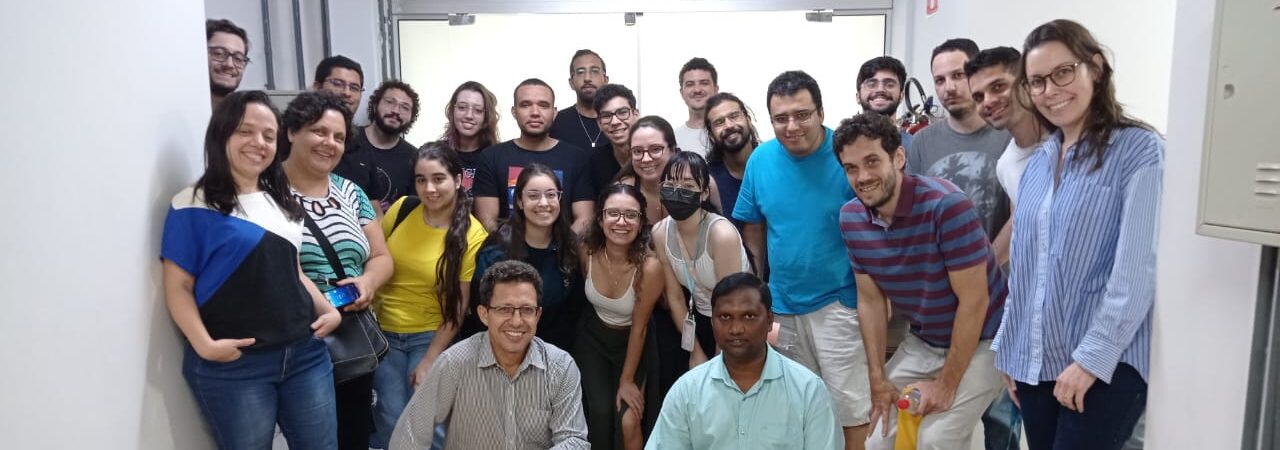
The GIIMUS delegation is participating in the IEEE International Ultrasonics Symposium (IUS 2026), one of the world’s leading international meetings of the ultrasound scientific community, taking place in Raleigh, North Carolina, USA. The symposium brings together researchers, students, professionals, and industry representatives from around the world to share the latest scientific advances and technological innovations in ultrasound, with important applications in healthcare, biomedical engineering, and other fields. GIIMUS is represented by Profs. Adilton Carneiro and Theo Pavan, along with PhD students Ariane Sanches Lara Zanello and Lucas Costa, presenting and discussing recent results, exchanging experiences with the international community, and strengthening collaborations in biomedical ultrasound.
Participation in IUS 2026 reinforces GIIMUS’s commitment to advancing ultrasound science, technology, and innovation for healthcare, while creating new opportunities for our students and expanding our international research network.
Established in 2004, GIIMUS brings together individuals with diverse expertise, spanning from medical physics and biomedical engineering to biological sciences. At its core, the group focuses on advancing biomedical instrumentation and optimizing signal and image processing techniques. Noteworthy endeavors include the innovation and adaptation of ultrasonic, magnetic, and optical transducers for a multitude of biological applications, ranging from diagnostic imaging to therapeutic methods.
Examples of these advancements include pioneering ultrasound and photoacoustic imaging approaches, integrating ultrasound imaging with therapeutic devices into theranostic systems, exploring synergies between ultrasound and nanomedicine, and ultrasound neuromodulation techniques. Additionally, the group specializes in tissue characterization techniques such as elastography, the development of tissue-mimicking phantoms for various applications, among other pursuits.
Central to GIIMUS’s mission is the development of non-invasive technologies leveraging non-ionizing energy, all with the overarching goal of enhancing human health and well-being. See a summary of our research fields and infrastructure.
Financial support for our research has been provided by