




4-6 de Novembro de 2025
no Auditório CDI USP e no DigitalLab no InovaUSP.
Inova USP: Av. Prof. Lúcio Martins Rodrigues, 370
CDI: Av. Prof. Lúcio Martins Rodrigues, 310
A Conferência de Pesquisa e Inovação em Transição Energética (ETRI) é um evento consolidado que celebrará sua oitava edição em 2025, com o tema: ETRI 2025 e USP Pré-COP30: Ações para o Futuro da Transição Energética. Organizado pela Universidade de São Paulo, o ETRI reúne os principais cientistas do Brasil, juntamente com líderes-chave da indústria e do governo, incluindo representantes de diversas secretarias e ministérios em níveis estadual e nacional. O evento também recebe consulados e representantes de embaixadas, unindo stakeholders para discutir caminhos e soluções para uma transição energética justa e necessária.
Tradicionalmente organizado pelo Research Centre for Greenhouse Gas Innovation (RCGI – USP), a conferência deste ano apresenta um novo colaborador: o Offshore Technology Innovation Centre (OTIC). Juntos, o RCGI e o OTIC criarão uma plataforma ampliada para abordar uma ampla gama de temas e explorar diferentes abordagens para a transição energética.
O ano de 2025 é especialmente significativo para o Brasil, que sediará a Conferência das Nações Unidas sobre Mudanças Climáticas de 2025, conhecida como COP30, de 10 a 21 de novembro, em Belém. O ETRI 2025 ocorrerá na semana anterior, de 4 a 6 de novembro, servindo como um precursor para algumas das discussões críticas que serão realizadas na COP30.
Esta edição do ETRI também marca um marco importante para o RCGI, que celebrará seu 10º aniversário. Com tanto a comemorar e realizar, o ETRI 2025 promete fortalecer ainda mais a colaboração entre academia, indústria e governo—os pilares do modelo da hélice tríplice—enquanto trabalhamos juntos para construir um futuro melhor e mais sustentável.

O RCGI agradece à Skyrats pela disponibilização das imagens de drone.
🔵 Digital Labs – IRIS Space, Block A, 2º andar, Edifício do Inova USP, USP Butantã campus – Av. Prof. Lúcio Martins Rodrigues, 370
🟢 CDI – Av. Prof. Lúcio Martins Rodrigues, 310
🟡 SP + Verde – Parque Villa-Lobos – Av. Prof. Fonseca Rodrigues, 2.001
🟠 Tour Guiados – https://www.agendaspmaisverde.org.br/visitas-guiadas/rcgi-usp-e-ipt-apresentam-a-rota-do-hidrogenio-em-sao-paulo/
🟣 Sala de Ideação – Bloco B, 4º andar – Av. Prof. Lúcio Martins Rodrigues, 370
[https://www.agendaspmaisverde.org.br/]
Local: Parque Villa Lobos, Palco Economia Verde
09:00 h – 10:00 h – Participação em evento SP + Verde [português]
Participação da Agenda SP + Verde, promovido pelo Governo do Estado de São Paulo.
10:00 h – 11:00 h – Painel dos Governadores: Nova Visão da Economia Verde [português]
– Tarcísio de Freitas – Governo de São Paulo
– Joaquim Leite – Ex-ministro do Meio Ambiente
Liv Nakashima Costa – Diretora de Gestão Corporativa e Sustentabilidade, CETESB
Ricardo Rosario – Assessor Especial na Secretaria de Agricultura e Abastecimento, Governo de São Paulo
Bruno Laskowsky – Sócio YvY Capital
Julio Meneghini – Diretor Científico RCGI-USP
Visitação às experiências imersivas e de realidade virtual no Digital Lab
Lançamento e apresentação do Observatório de Normatização (RCGI-OS) – Observatory of Standardization (resultado do projeto 69)
Espaço IRIS, Bloco A, 2 andar, no prédio do Inova USP, no campus da USP Butantã – Av. Prof. Lúcio Martins Rodrigues, 370 – Butantã, São Paulo – SP, 05508-020.
Autoridades do ETRI, da USP e externas (FAPESP, ANP, Secretarias, Empresas)
ETRI – Prof. Dr. Karen Mascarenhas – Chair do ETRI e Diretora de Recursos Humanos do RCGI
RCGI – Prof. Dr. Julio Meneghini – Professor Titular da Escola Politécnica e Diretor Científico do RCGI
OTIC – Prof. Dr. Gustavo Assi – Professor Titular da Escola Politécnica e Diretor Científico do OTIC
FAPESP – Prof. Dr. Ricardo Ivan Ferreira da Trindade, Coordenador Geral de Programas Estratégicos e Infraestruturas da Diretoria Científica
REITORIA USP – Prof. Dr. Carlos Carlotti Jr – Reitor da Universidade de São Paulo
Subsecretaria de Energia e Mineração – Dr. Danilo Perecin, Diretor de Enegia da Secretaria de Meio Ambiente, Infraestrutura e Logística do Governo de SP, representando a Subsecretária de Energia e Mineração do Estado de São Paulo, Dra Marisa de Barros
Secretaria de Ciência, Tecnologia e Inovação – Prof. Dr. Vahan Agopyan – Secretário de Ciência, Tecnologia e Inovação do Estado de São Paulo
Petronas – Sr. Jonas Castro – Head de Pesquisa, Desenvolvimento e Inovação da PETRONAS Brasil
Hyundai – Dr. Ricardo Martins – Chief Administrative Officer da Hyundai Motor das Américas Central e do Sul e da Hyundai Motor Brasil.
TotalEnergies – MSc. Samuel Cunha – Diretor Pesquisa e Desenvolvimento
Local: Digital Lab – Espaço IRIS, Bloco A, 2 andar, no prédio do Inova USP, no campus da USP Butantã – Av. Prof. Lúcio Martins Rodrigues, 370 – Butantã, São Paulo – SP, 05508-020.
Escadas do Prédio do Inova USP
NBS
CCUS
BECCS
Advocacy
ELECTRIFICATION
(Mais informações em breve)
Local: Digital Lab – Espaço IRIS, Bloco A, 2 andar, no prédio do Inova USP, no campus da USP Butantã – Av. Prof. Lúcio Martins Rodrigues, 370 – Butantã, São Paulo – SP, 05508-020.
CCUS
GHG
ELECTRIFICATION
ECONOMY
OTIC: NPO
(Mais informações em breve)
Local: Digital Lab – Espaço IRIS, Bloco A, 2 andar, no prédio do Inova USP, no campus da USP Butantã – Av. Prof. Lúcio Martins Rodrigues, 370 – Butantã, São Paulo – SP, 05508-020.
NBS
CCUS
GHG
ELECTRIFICATION
OTIC: HSE
(Mais informações em breve)
Local: Digital Lab – Espaço IRIS, Bloco A, 2 andar, no prédio do Inova USP, no campus da USP Butantã – Av. Prof. Lúcio Martins Rodrigues, 370 – Butantã, São Paulo – SP, 05508-020.
Local: Sala de Ideação – Bloco B, 4 andar, no prédio do Inova USP, no campus da USP Butantã – Av. Prof. Lúcio Martins Rodrigues, 370 – Butantã, São Paulo – SP, 05508-020.
A visita guiada “Rota do Hidrogênio em São Paulo” oferece uma imersão única nas iniciativas que colocam o Brasil na liderança global da transição energética.
O percurso tem início na planta piloto de produção de hidrogênio a partir do etanol, desenvolvida pelo Centro de Pesquisa e Inovação em Gases de Efeito Estufa (Research Centre for Greenhouse Gas Innovation – RCGI-USP) e instalada na Universidade de São Paulo. Primeira no mundo com essa configuração, a planta utiliza uma tecnologia inovadora que converte etanol — uma fonte renovável e amplamente disponível — em hidrogênio de baixo carbono, contribuindo para fortalecer o papel do Brasil como referência internacional em soluções energéticas sustentáveis e no aproveitamento estratégico do etanol como vetor de descarbonização.
Na sequência, os participantes visitarão o Laboratório de Hidrogênio (LabH2) do Instituto de Pesquisas Tecnológicas (IPT). Recém-inaugurado, o LabH2 conta com equipamentos de última geração para produção, armazenamento e abastecimento de veículos movidos a hidrogênio — como ônibus, carros e caminhões.
A visita inclui também o Centro de Energias do Futuro (CENF), voltado à pesquisa e ao desenvolvimento de tecnologias que aproximam ciência e aplicação industrial, essenciais para o avanço da mobilidade e da indústria de baixo carbono.
Horário de embarque: 9:30
Horário de desembarque no Summit: 13:00
Bilíngue: Sim
Marcos Oliveira, Vice Presidente de Producción
Durante a apresentação, haverá uma atividade de ativação, na qual os participantes que estiverem presentes poderão ler um QR code para se inscrever para o sorteio de uma visita à fábrica da Hyundai, com almoço e visita a planta de tratamento de resíduos.
Local: Sala de Ideação – Bloco B, 4 andar, no prédio do Inova USP, no campus da USP Butantã – Av. Prof. Lúcio Martins Rodrigues, 370 – Butantã, São Paulo – SP, 05508-020.
Suhana Sidik – PETRONAS
Innovación para el Impacto: Camino hacia la Descarbonización
Local: Sala de Ideação – Bloco B, 4 andar, no prédio do Inova USP, no campus da USP Butantã – Av. Prof. Lúcio Martins Rodrigues, 370 – Butantã, São Paulo – SP, 05508-020.
Local: Digital Lab – Espaço IRIS, Bloco A, 2 andar, no prédio do Inova USP, no campus da USP Butantã – Av. Prof. Lúcio Martins Rodrigues, 370 – Butantã, São Paulo – SP, 05508-020.
CCUS
ELECTRIFICATION
DECARBONISATION
ECONOMY
OTIC: DIGITAL TECHNOLOGY
(Mais informações em breve)
Local: Digital Lab – Espaço IRIS, Bloco A, 2 andar, no prédio do Inova USP, no campus da USP Butantã – Av. Prof. Lúcio Martins Rodrigues, 370 – Butantã, São Paulo – SP, 05508-020.
ELECTRIFICATION
DECARBONISATION
ESG
OTIC: NM
OTIC: LCP
(Mais informações em breve)
Local: Digital Lab – Espaço IRIS, Bloco A, 2 andar, no prédio do Inova USP, no campus da USP Butantã – Av. Prof. Lúcio Martins Rodrigues, 370 – Butantã, São Paulo – SP, 05508-020.
Moderador: Julio Meneghini (RCGI)
– Plinio Nastari (DATAGRO)
– Arnaldo Jardim (Deputado)
– Evandro Gussi (ÚNICA)
– Flavio Haruo Mathuiy (Marinha)
Local: Sala de Ideação – Bloco B, 4 andar, no prédio do Inova USP, no campus da USP Butantã – Av. Prof. Lúcio Martins Rodrigues, 370 – Butantã, São Paulo – SP, 05508-020.
– Fernanda Delgado (Presidente Associação Brasileira da Indústria do Hidrogênio Verde) –
– Andre Faaij – Director of Science & Technology and Chief Scientist at TNO Energy & Materials Transition, professor in Energy System Analysis at Utrecht University and the University of Groningen.
Discutir impacto da inovação e do uso da inteligência artificial na sustentabilidade da transição energética, compartilhando experiências.
Moderador: Gustavo Assi (OTIC)
– Caetano Miranda (RCGI – IFUSP)
– Luciana Nicola (Itaú)
– Christiano Lins (TotalEnergies)
– Jacqueline Vaessen (Directeur a.i. NLHydrogen)
– Wytske van der Mei (Directorate for Sustainable Environment and Circular Economy at the Ministry of Infrastructure and Water Management in the Netherlands)
Local: Sala de Ideação – Bloco B, 4 andar, no prédio do Inova USP, no campus da USP Butantã – Av. Prof. Lúcio Martins Rodrigues, 370 – Butantã, São Paulo – SP, 05508-020.
Premiação dos melhores trabalhos apresentados na conferência.
Sorteio dos ganhadores da visita à fábrica da Hyundai.
Local: Digital Lab – Espaço IRIS, Bloco A, 2 andar, no prédio do Inova USP, no campus da USP Butantã – Av. Prof. Lúcio Martins Rodrigues, 370 – Butantã, São Paulo – SP, 05508-020
Julio Romano Meneghini – Diretor do RCGI
Claudia Brun – Vice-Presidente de Estratégia e Desenvolvimento de Negócios da Equinor Brasil
Vahan Agopyan – Secretário de Ciência, Tecnologia e Inovação do Estado de São Paulo
Natália Resende – Secretária de Meio Ambiente, Infraestrutura e Logística do Estado de São Paulo
SP + Verde
Local: Parque Villa Lobos
Empresas convidadas farão a apresentação institucional e de suas oportunidades, seja de vagas, ou programas como estágio, trainee, outros.
Empresas convidadas farão apresentação de seus programas para startups.
Startups convidadas farão apresentação de seu negócio para os visitantes da feira.
Local: Digital Lab – Espaço IRIS, Bloco A, 2 andar, no prédio do Inova USP, no campus da USP Butantã – Av. Prof. Lúcio Martins Rodrigues, 370 – Butantã, São Paulo – SP, 05508-020
Natália Resende, Secretária de Meio Ambiente, Infraestrutura e Logística
Marcela Arruda, Secretária de Gestão de São Paulo
Celso Lafer, Professor Emérito da USP e Vice-Presidente ex-officio da Conferência Rio-92
Ray Offenheiser, Assessor do Reitor da Universidade de Notre Dame
Patrícia Iglecias, Coordenadora USPproCLIMA, Superintendente de Gestão Ambiental-USP
Moderadora: Tamara Gomes, Centro USPproClima
Fabio Feldmann, ex-Secretário do Meio Ambiente
David Canassa, Diretor, Reserva Votorantim
Lucio Vicente, Diretor, Instituto AKATU
Eduardo Prates, CEO, Eco Circuito
Rosa Ramos, Presidente, Comissão de Mudanças Climáticas da OAB/SP
Sabrina Andrade, Ambipar
Moderadora: Fernanda Brando, Centro USPproClima
Luiz Fernando, SOS Mata Atlântica
Ricardo Rodrigues, ESALQ
Rodrigo Levkovicz, Fundação Florestal
Patricia Locosque Ramos, Diretora de Biodiversidade e Biotecnologia, SEMIL-SP
Gabriel Menezes, Instituto Auá
Moderador: Marcelo Zuffo, INOVA
Marco van der Ree, Fundador, Brokering Solidarity
Sérgio Pacca, EACH-USP
Fernanda Sossai, Diretora de Sustentabilidade, Ambipar
Ming Hu, University of Notre Dame
Marina Maciel, Sócia do BMA Advogados
Patrícia Iglecias, Centro USPproClima
Paulo Artaxo, CEAS/USP
Paulo de Andrade Lotufo, CPCE/USP
Julio Romano Meneghini, RCGI/USP
Gustavo Assi, OTIC
Ricardo Trindade, Centro USP-China
16h15 – 16h30: Intervalo para café
Moderador: Aroaldo Oliveira, Secretário Executivo, Consórcio Intermunicipal ABC
Alberto Amorim, Secretário Executivo de Agricultura e Abastecimento SAA-SP
Gabriel Wedy, juiz federal e professor da UNISINOS
Analía Cervini, Head de Comms em Linkedin Latam
Michelle Cauchica, CEO da Amazonia Revive
12:00 h – 13:00 h – Abertura do Digital Lab para visitação [ENG e PT]
13:00 h – 14:30 h – Abertura do ETRI 2025 (Café) [português]
14:30 h – 15:00 h – Café & Network
15:00 h – 16:00 h – Short Oral Session A (5 sessões paralelas)
16:00 h – 17:00 h – Short Oral Session B (5 sessões paralelas)
17:00 h – 18:00 h – Short Oral Session C (5 sessões paralelas)
10:10 h – 10:30 h – Café & Network (Observatório de Normatização RCGI-OS)
10:30 h – 11:30 h – Short Oral Session D (5 sessões paralelas)
11:30 h – 12:30 h – Short Oral Session E (5 sessões paralelas)
16:00 h – 17:00 h – ETRI 2025 AWARDS
TCB
09:00 h – 09:10 h – Abertura do segundo dia
09:30 – 12:30 – RCGI-USP e IPT apresentam: A Rota do Hidrogênio em São Paulo
09:10 h – 09:40 h – Marcos Oliveira, Vice Presidente de Producción (Hyundai) [português]
09:40 h – 10:10 h – Innovación para el Impacto: Camino hacia la Descarbonización | Suhana Sidik (PETRONAS) [inglês]
14:00 h – 15:00 h – Painel: Descarbonização e Combustível do Futuro [inglês]
15:00 h – 16:00 h – Painel: Inovação, Sustentabilidade e Inteligência Artificial [inglês]

Esta trilha temática envolve a restauração da vegetação nativa, a expansão de sistemas agrícolas integrados e a restauração de áreas de pastagem. Além disso, a trilha também considera técnicas para restaurar a vegetação e restabelecer espécies nativas. Dessa forma, o solo acumulará uma alta biodiversidade de substratos vegetais que estimularão sua biomassa microbiana, resultando em potencial fixação de carbono no solo.

Esta linha temática concentra-se na criação de valor a partir das emissões de CO2 por meio do desenvolvimento de processos integrados para captura e conversão de CO2. Neste conceito, o CO2 é considerado um valioso componente químico para combustíveis e materiais. Esta linha também inclui tecnologias utilizadas no armazenamento de CO2 em estruturas geológicas e outros tipos.

Esta trilha temática envolve tecnologias ou um conjunto de tecnologias que associam energia de biomassa com captura, uso e armazenamento de carbono, um processo sempre realizado em larga escala. Com isso, é possível sequestrar carbono da atmosfera. São incluídos trabalhos que apresentem as tecnologias e sua contribuição para a construção de uma percepção pública positiva do BECCUS, influenciando o desenho de políticas públicas de sustentabilidade para os sistemas energéticos brasileiros.

O Programa de Gases de Efeito Estufa (GEE) é dedicado ao estudo de tecnologias relacionadas à medição e quantificação de emissões de GEE, mitigação de emissões de GEE, como máquinas e dispositivos pneumáticos em geral, combustão química em loop e combustão oxi-combustível, sistemas de adsorção para captura de CO2 de gases de combustão, solventes eutéticos profundos para captura de CO2 de gases de combustão e membranas para captura de CO2 de gases de combustão.

Esta linha temática apoia políticas que visam promover uma transição energética justa, igualdade de gênero, acesso e segurança energética, redução da pobreza e engajamento social. Isso é alcançado por meio da compreensão da percepção e aceitação social de todas as partes interessadas, bem como do público em geral, e do estabelecimento de um diálogo aberto com a sociedade. Esta linha também está relacionada ao desenvolvimento de documentos para mudanças climáticas, desenvolvimento sustentável e descarbonização, como padrões de requisitos, especificações e guias, que podem ser usados para garantir consistentemente que materiais, produtos, processos e serviços sejam adequados aos seus propósitos. Trabalhos e estudos nessas áreas são essenciais para apoiar a transição e a implementação tecnológica.

Esta trilha temática busca apresentar soluções inovadoras e sustentáveis focadas na descarbonização de sistemas de energia elétrica. Inclui, entre outros, aspectos como materiais ecoeficientes, maior disponibilidade e eficiência na produção de eletricidade, otimização de recursos energéticos distribuídos e integração com a agricultura, e digitalização da eletricidade.

Esta trilha envolve resumos relacionados ao desenvolvimento de tecnologias, novos materiais, ferramentas computacionais, testes experimentais, provas de conceitos e inteligência artificial atrelados à transição energética, com foco em pesquisa básica e aplicada com o objetivo de tornar os processos industriais mais sustentáveis e implementados em larga escala.
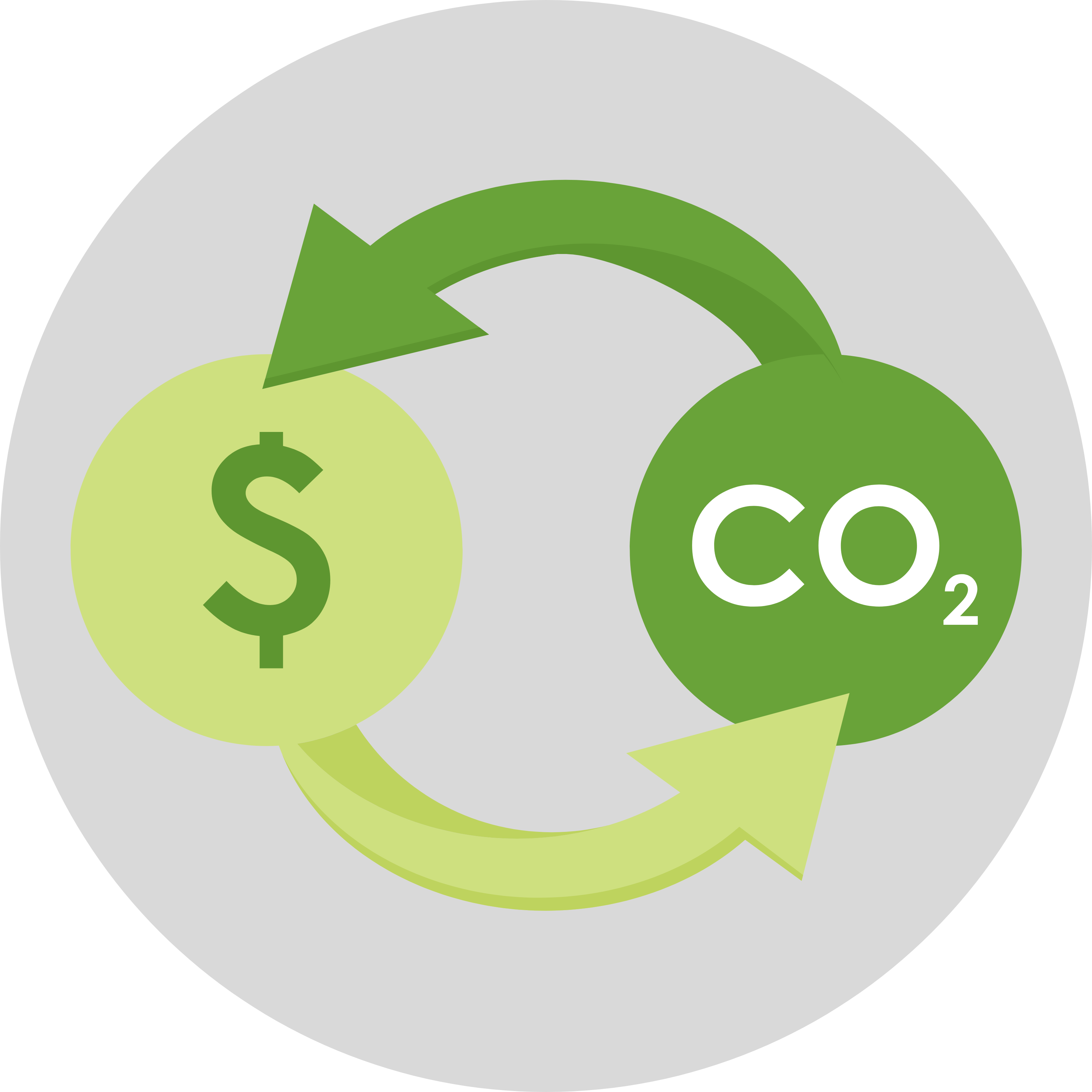
Esta trilha inclui resumos sobre cenários e modelagem de transição energética. Também inclui aspectos de artigos econômicos, como a viabilidade econômica de diversas tecnologias de baixo carbono e os desafios e benefícios das políticas relacionadas a créditos de carbono, bem como análises SWOT.

Sustentabilidade, responsabilidade social e boa governança são temas de suma importância para governos e o setor empresarial na criação de valor, tanto para consumidores quanto para investidores. A estrutura Ambiental, Social e de Governança (ESG) é uma ferramenta crucial para avaliar e lidar com essas questões, incluindo sua contribuição para os ODS. Indústrias e empresas estão convidadas a apresentar seus esforços nessas áreas.

Abrangendo produção sustentável de hidrogênio a partir de gás natural offshore, separação avançada de gás submarino, desemulsificação submarina de emulsões de petróleo bruto e inspeção baseada em risco de equipamentos submarinos.

Enfrentando os principais desafios em energia offshore por meio do desenvolvimento de usinas híbridas que integram gás para fio, captura de carbono e energia renovável oceânica, otimizando turbinas eólicas de eixo vertical para águas profundas, avançando em centros de energia nuclear offshore e inovando em cabos de energia dinâmicos para plataformas de energia flutuantes.

Aborda gêmeos digitais para produção de petróleo e gás, configurações de rede ideais para hubs de energia com CCS, gerenciamento de big data, realidade virtual e aumentada para operações offshore, fusão de dados para monitoramento, um centro digital para simulação de operação remota e ferramentas de realidade virtual para avaliar a percepção pública e a interação entre humanos e tecnologia.

Com foco em novos revestimentos para proteção contra corrosão e garantia de fluxo, materiais adsorventes para armazenamento de hidrogênio e CO2 usando estruturas metal-orgânicas e compósitos poliméricos para estruturas offshore.

Abrangendo estratégias de descomissionamento circular para FPSOs, um Observatório Oceânico Digital, simulações remotas de operações offshore, mapas de risco em tempo real e uma estrutura de avaliação de créditos de carbono para a transição energética.
Advocacy - Standardisation, Regulation, Social Perception & Acceptance
Carbon Capture Utilisation and Storage (CCUS)

Digital Technology
Greenhouse Gas Reduction Technologies (GHG)
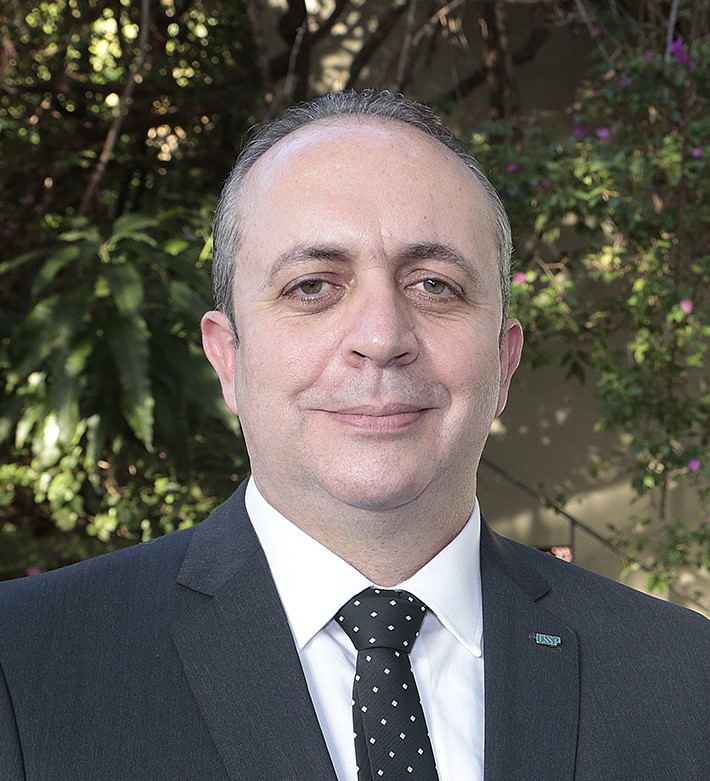
Bioenergy with Carbon Capture Utilization and Storage (BECCUS)

ESG - Environmental, Social, and Governance

Greenhouse Gas Reduction Technologies (GHG)
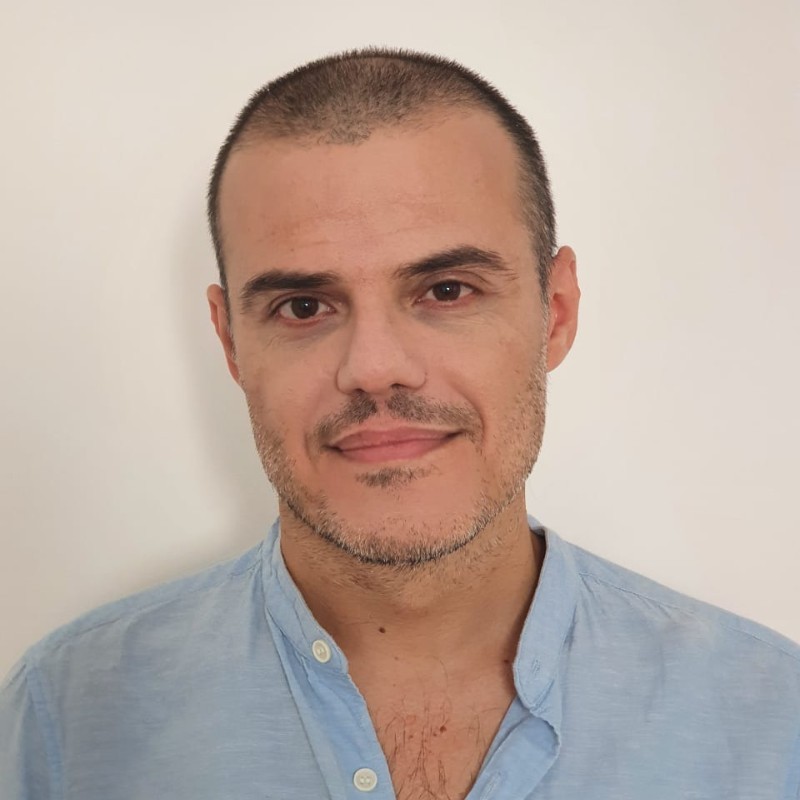
Carbon Capture Utilization and Storage (CCUS)
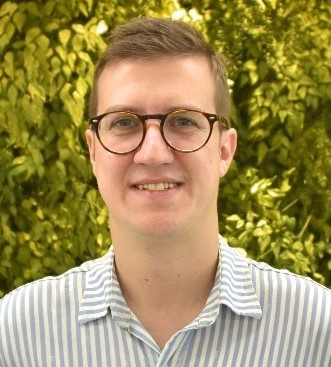
Greenhouse Gas Reduction Technologies (GHG)

Low Carbon Power

Decarbonisation Technologies

Carbon Capture Utilization and Storage (CCUS)

Electrification, Power & Storage - InnovaPower

Greenhouse Gas Reduction Technologies (GHG)

Electrification, Power & Storage - InnovaPower

Natural Based Solutions (NBS)
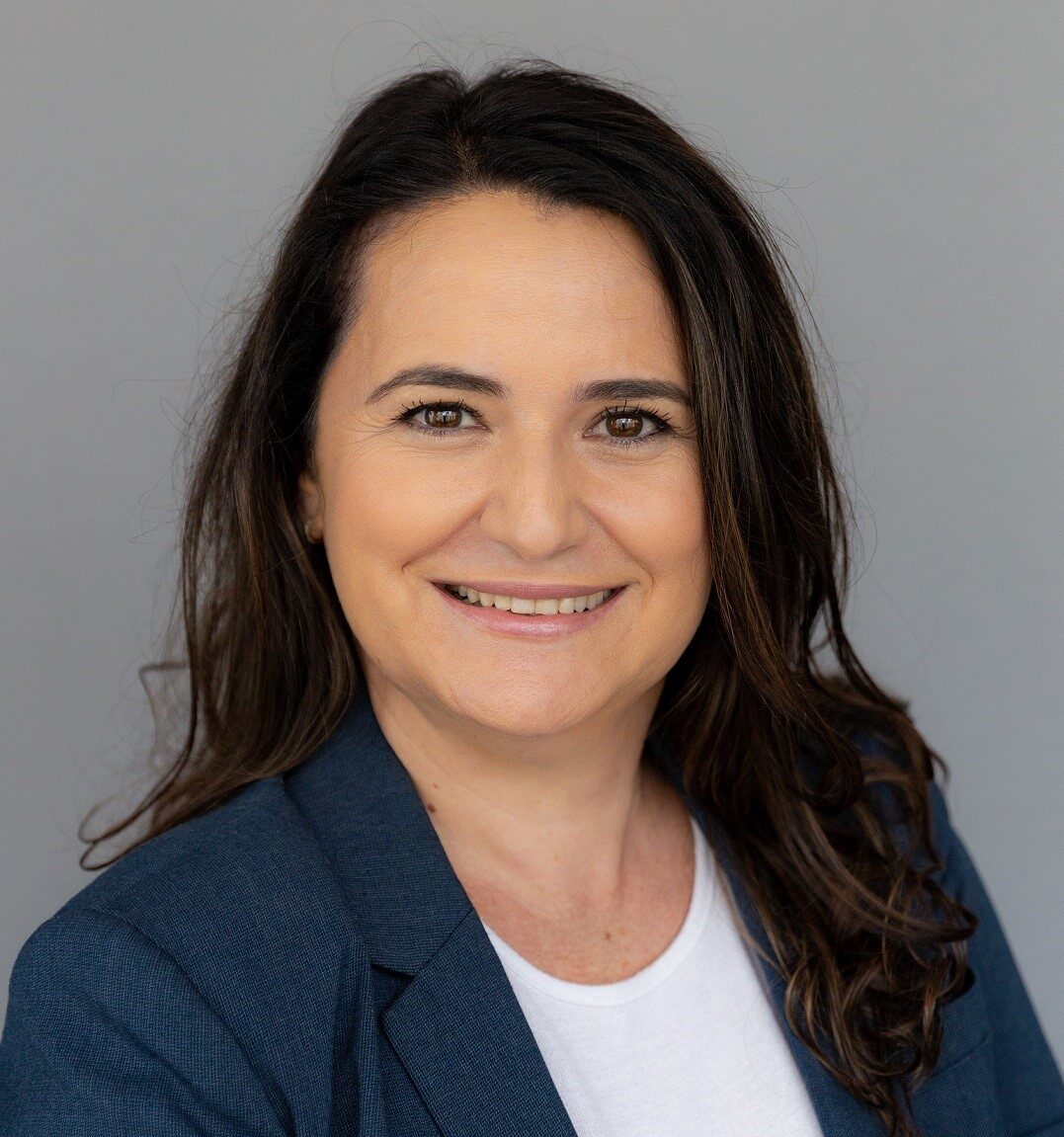
Carbon Capture Utilization and Storage (CCUS)

HSE & Circular Economy
Electrification, Power & Storage - InnovaPower
Natural Based Solutions (NBS)
Natural Based Solutions (NBS)
Electrification, Power & Storage - InnovaPower

Natural Based Solutions (NBS)
Advocacy - Standardisation, Regulation, Social Perception & Acceptance

Digital Technology

New Processes and Operations

Electrification, Power & Storage - InnovaPower
Electrification, Power & Storage - InnovaPower

ESG - Environmental, Social, and Governance
Bioenergy with Carbon Capture Utilization and Storage (BECCUS)

Novel Materials and Nanotechnology

RCGI-USP, Manager, Communication & Dissemination of Knowledge.

Ana Bárbara Moulin Cansian is a chemical engineer and postdoctoral researcher at USP, studying CO₂ conversion to methanol.
PhD and MSc from UFSCar, experienced in biorefineries and enzymatic processes.

Postdoctoral researcher at the Institute of Energy and Environment at the University of São Paulo (IEE-USP), associate researcher with GBio and the RCGI-USP.

Undergraduate student in Electrical Engineering at the Polytechnic School of the University of São Paulo (USP) since 2022 and a research fellow at LabRisco/USP.
Undergraduate student in Naval and Ocean Engineering from the Polytechnic School of the University of São Paulo.

He holds a bachelor’s degree in Portuguese/Japanese from the Faculty of Philosophy, Languages and Literature, and Human Sciences at the University of São Paulo (USP).

RCGI-USP, Executive Assistant.
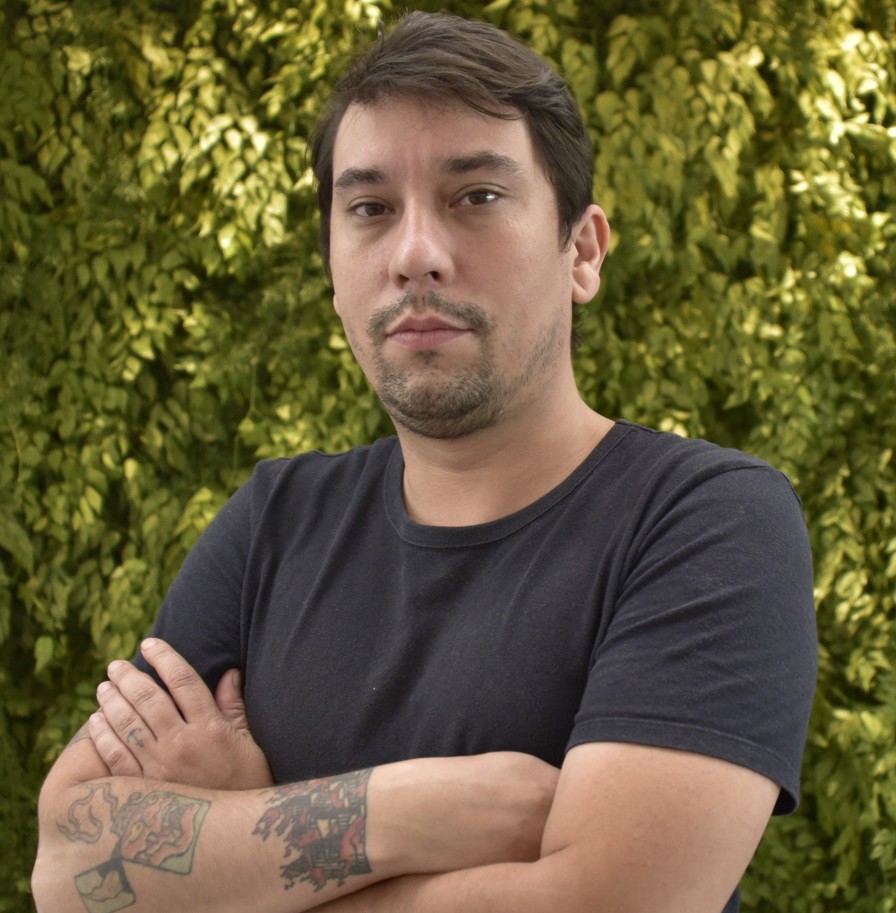
RCGI-USP, Marketing Specialist.
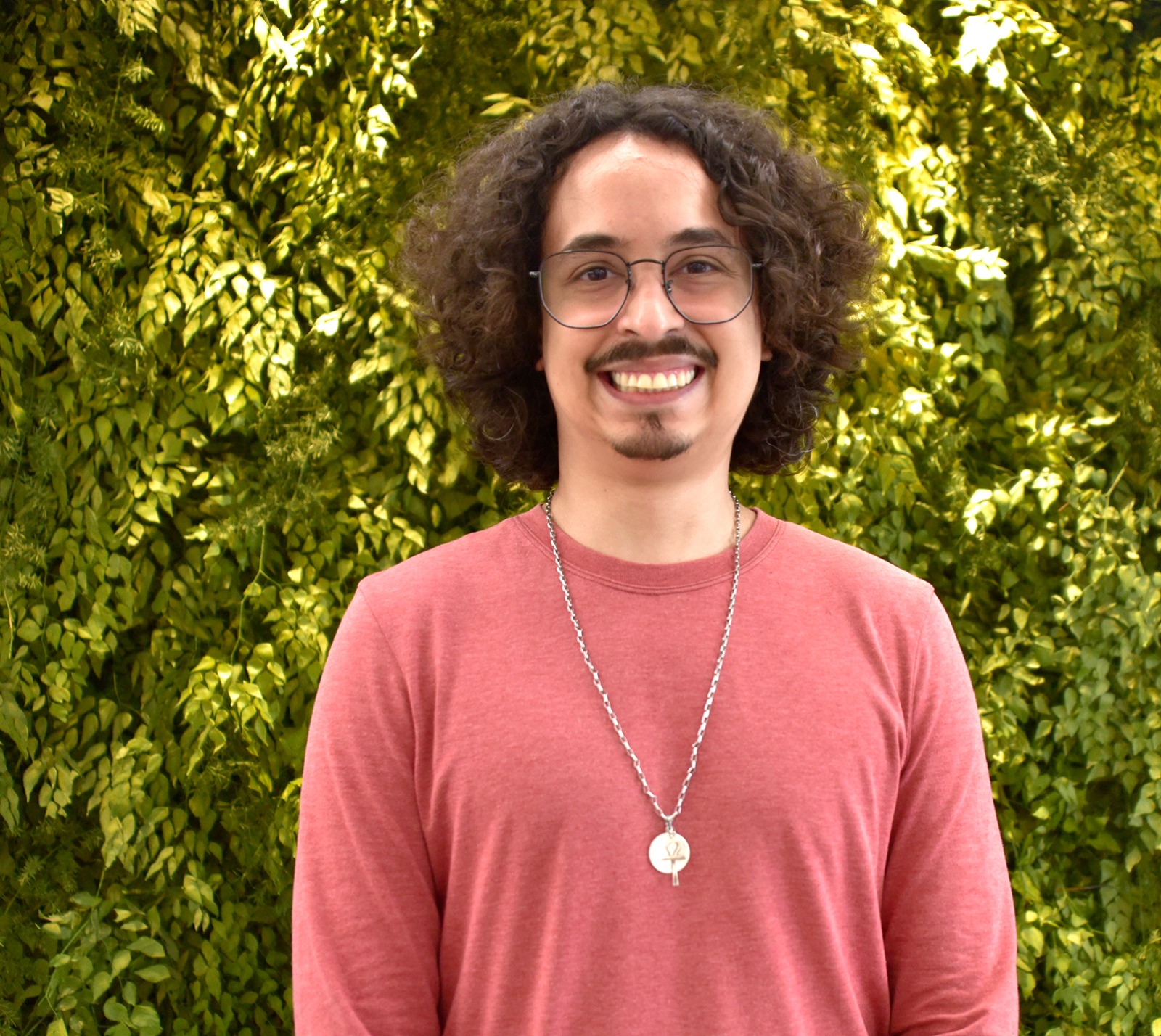
Postdoctoral researcher at POLI-USP and member of RCGI-USP. His work focuses on topology optimization to improve the performance of components in low-carbon systems.

Forest engineer with a Master’s degree in Forest Science (UFV) and a PhD in Energy Planning (IEE/USP), including a PhD research stay at Imperial College London. Postdoctoral researcher at IEE/USP and an associate researcher at GBio/IEE/USP.

Postdoctoral researcher at the Polytechnic School of the University of São Paulo and an associate researcher at RCGI-USP in the InnovaPower programme.

Chemical Engineering student at USP, Scientific Initiation under the supervision of Professor Daniela Damasceno (Department of Mechatronics Engineering - RCGI - USP).

Naval Engineer with a degree from USP and experience in ship maintenance and marine projects, as well as having operated river maneuvering simulations at IPT.

Undergraduate student in Industrial Engineering at Escola Politécnica of the University of São Paulo (Poli-USP). At the Research Centre for Greenhouse Gas Innovation (RCGI), he works on Innovation & Technology Transfer projects.

PhD, is currently an assistant professor at the University of São Paulo in the Department of Mechatronics and Mechanical Systems.
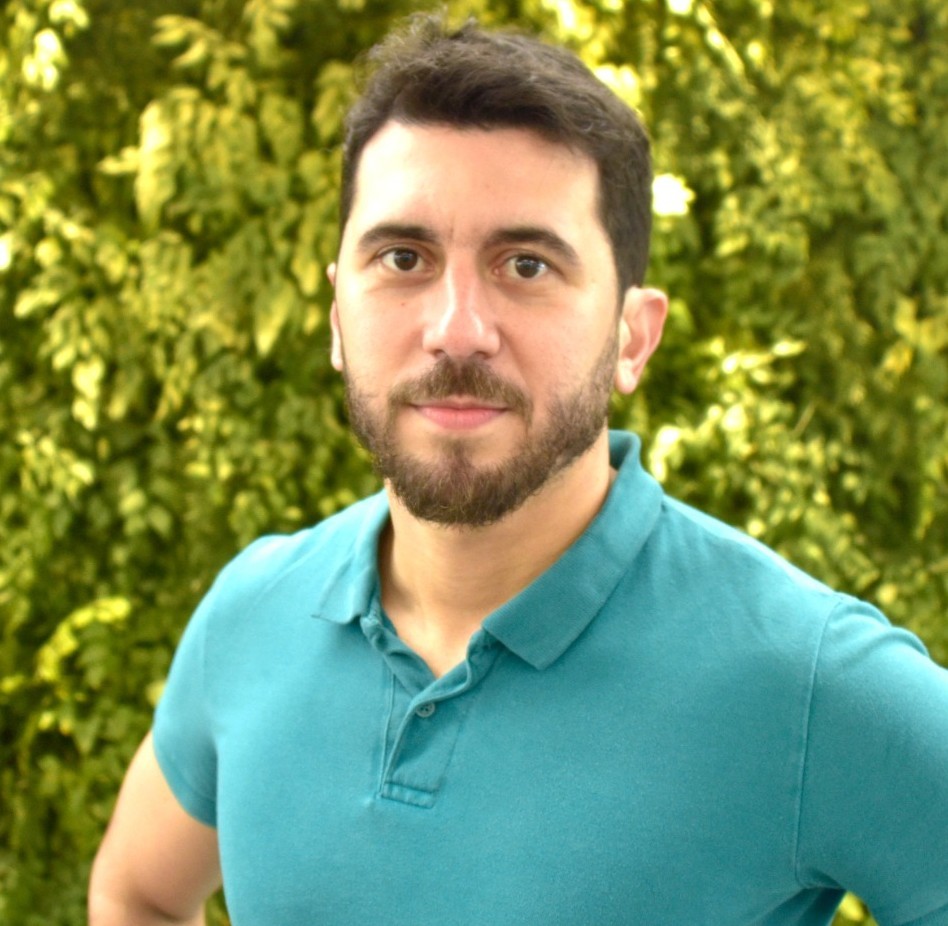
A POLI-USP PhD candidate and founder of PoliEnergy, he works on PVD coatings, tribology, FEA/CFD, machine design, and solutions for energy efficiency and the energy transition.

Mathematics Education student at USP and a Scietific Iniciation research.

RCGI-USP, receptionist.

PhD candidate at the Polytechnic School of the University of São Paulo (USP) and associate researcher at the Research Centre for Greenhouse Gas Innovation (RCGI-USP).

RCGI-USP, receptionist.
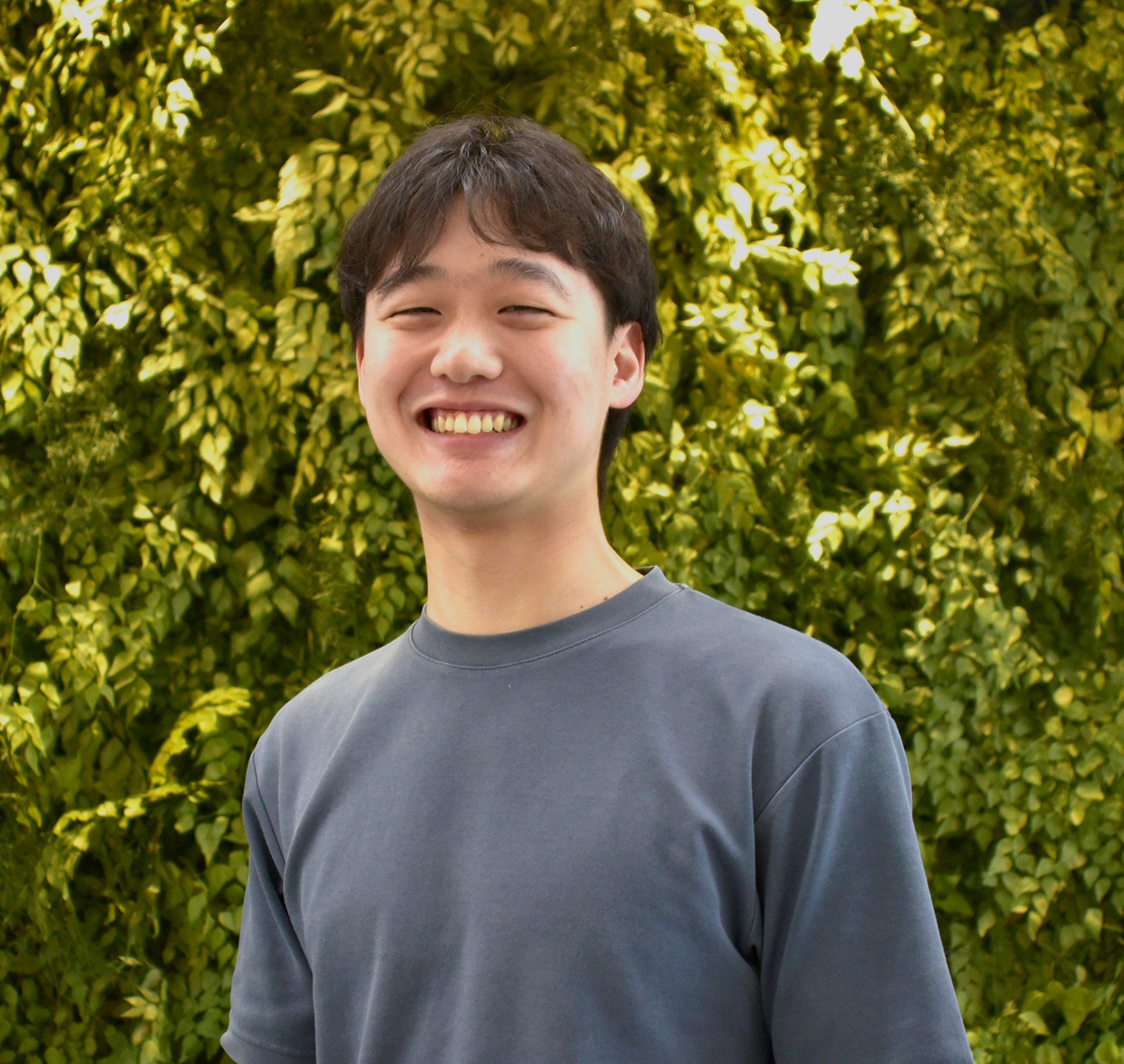
Vinícius Kenzo Inoue is a master’s student in Naval Architecture and Ocean Engineering at the Polytechnic School of the University of São Paulo (USP).
Director of Human Resources and Institutional Communication at RCGI
Deputy Coordinator of the project “Social Perception and Science Diplomacy for the Technology Transition towards a Low-Carbon Society” at RCGI
Since 2016 serves as Director of Human Resources and Leadership Management for the RCGI – Research Centre for Gas Innovation located at the Polytechnic School of the University of São Paulo (USP), funded by FAPESP (São Paulo State Funding Agency) and Shell Brasil. In 2021 she became the deputy coordinator of the project “Social Perception and Science Diplomacy in the Technology Transition towards a Low-Carbon Society”. And in 2023, after concluding her PhD, she assumed the Directory of Institutional Communication and Human Resources. She has a degree in Psychology from the University of São Paulo (USP), a post-graduation in Administration from Fundação Getúlio Vargas (FGV), a master's in Social Psychology from Pontificia Universidade Católica (PUC-SP) and PhD in Social Psychology from the University of São Paulo (USP), with a year as researcher at Imperial College London. Before, developed approximately 18 years of experience in companies as Unilever, Andersen Consulting (Accenture), Chase Manhattan Bank (JP Morgan Chase), Banco Itaú, and Grupo VR (Sodexo), growing in her career from analyst to director. Worked in Human Resources and Change Management consulting for more than 15 years, focused on Coaching, Career Management, Leadership and Team Development, Mentoring Programs, Change Management and Organisational Culture, among others. Serves as a Visiting Professor at Fundação Getúlio Vargas (FGV) for the post-graduation program since 2009.
Director of Science, TNO Energy & Material Transition, The Netherlands largest energy research organization with some 1,000 co-workers. He combines this with part time Professor chairs ‘’Energy System Analysis’’ at Utrecht University (UU) and University of Groningen (RUG).
Ongoing research covers energy system integration solutions & modelling, industrial transformation & circular economy, transition processes towards sustainable energy systems and industry and related innovation and policy questions. He is a member of a variety of (inter) national expert groups in energy policy, biobased economy, research and strategic planning. Advisor for governments, the EC, IEA, the UN system (including UNIDO, UNEP, FAO), GEF, OECD, WEF, IAEA, WEC, the energy sector& industry, strategic consultancy, NGO’s, etc.
He is chair of the NERA; Netherlands Energy Research Alliance and Executive Committee member of the European Energy Research Alliance (EERA) Listed as ‘highly cited researcher’ by Clarivate Web of Science Group (previously Thomson Reuters); top 1% of research field.
As IPCC member, awarded with the Nobel Peace Prize for the IPCC in 2007. Awarded the Linneborn Prize; for outstanding contributions to the development of energy from biomass.
Listed at Research.com at # 115 globally for Environmental Sciences and # 71 globally for Engineering en Technology. For the Netherlands #4 and #3 respectively (2022).
More information can be found at: (5) Andre Faaij | LinkedIn
🔗 https://www.linkedin.com/in/andre-faaij-62a19413/
EPE, Biofuels Analyst
Soon
Possui mais de 30 anos de experiência no setor automotivo não somente na América Latina, mas também, Estados Unidos, Europa, Norte da África e Ásia.
Possui Graduação em Engenharia Eletrônica pela Universidade Mackenzie com MBAs em Gestão de Manufatura e de Projetos pelas Universidades de Michigan (EUA) e Darmstadt (Alemanha). Também, possui mestrado em Operações e Internacionalização de Empresas pela FIA-SP e Universidade de Grenoble (França) e Doutorado em Administração de Empresas pela FGV-SP (Brasil).
Desde 2012, Ricardo é um dos Vice-presidentes da ANFAVEA (Associação Nacional dos fabricantes de Veículos Automotores) e faz parte dos Conselhos da CNI (Confederação Nacional das Indústrias) e IQA (Instituto da Qualidade Automotiva).
Soon
Founder and President at DATAGRO Consulting
Graduated in Business Administration, Dr. Nastari holds the degrees of M.SC. and Ph.D. in Agricultural Economics from Iowa State University. He was for 22 years Professor of Economics at FGV – Getúlio Vargas Foundation, in São Paulo, in undergraduate and postgraduate courses (MBA, Master and Doctorate). With extensive experience in negotiations and commercial disputes at ITC (International Trade Commission) and the World Trade Organization, Dr. Nastari acted for the Brazilian government as Chief Economist in commercial disputes involving ethanol exports to the United States, subsidized sugar exports from the European Union, common banana import regime in the European Union, and Brazilian import regime of used and retreated tires.
Dr. Nastari is a member of the World Sugar Committee at ICE (Intercontinental Exchange) Futures in New York, where recommendations are made for improvements in contract rules and other matters related to world sugar trade. His career is closely associated with the development of ethanol and other biofuels in Brazil, and has also helped the development of ethanol in the United States through the Governors Ethanol Coalition, and in other Latin American, African and Asian countries, notably Thailand, India, Indonesia and the Philippines.
Since 1978, he has assisted the Brazilian government in Brazil in various instances through the National Energy Commission (1984-86), Commission for Reexam of the Energy Matrix (1991-93), and as Representative of the Civil Society at the National Council on Energy Policy (2016-2020 ). Since the 1980s, it has fostered the connection between biofuels and automakers having worked as Executive Director and Chairman of the Brazilian Association of Automotive Engineering (AEA), and as Lead Author of the IPCC.
He is president of IBIO, the Brazilian Institute of Bioenergy and Bioeconomy, and since 1984 founder and CEO of the Datagro Group, leading a team of over 190 professionals serving clients in 41 countries.
Secretary of Science, Technology, and Innovation of São Paulo’s State
Vahan Agopyan served as rector of the University of Sao Paulo from 2018 to 2022 and is currently the state secretary for Science, Technology, and Innovation in the state of Sao Paulo.
In 1974, he received his diploma in civil engineering from the Polytechnic School of the University of Sao Paulo (Poli-USP). He has been a professor at USP since 1975 and served as Vice-Rector and Pro-Rector of Postgraduate Studies, Director of Politécnica, and President of the Institute of Technological Research (IPT). He was also the president of the Institute for Energy and Nuclear Research’s (Ipen) Superior Council and a member of the Sao Paulo State Research Support Foundation’s Superior Council.
In 2004, the So Paulo Engineering Institute named him an Eminent Engineer.
Soon
Soon
University of São Paulo (USP) Dean
Soon
CEO UNICA
Evandro Gussi is president and CEO of the Sugarcane and Bioenergy Industry Union (UNICA), an entity dedicated to providing clean, renewable, and natural energy in the form of sugar, biofuels, bioelectricity, and biomass. Before assuming the direction of UNICA, he was elected federal deputy for the State of São Paulo, with a mandate from 2015 to 2019. In the National Congress, he served as leader of his party (2016–2017) and inspector of the Chamber of Deputies (2017–2019). Gussi was the author of the RenovaBio law, a reference for expanding the use of biofuels in Brazil, contributing to the country achieving its goals for reducing greenhouse gases and fulfilling the commitments made under the Paris Agreement. He has a master’s degree in Constitutional Law from the Federal University of Rio Grande do Sul (UFRGS) and a PhD in State Theory from the University of São Paulo (USP). In 2021, he completed the AMP International Executive Education Program (Advanced Management Program), at IESE Business School. Gussi was also a professor at the University of the State of São Paulo (UNESP) in the areas of Constitutional, Administrative and Environmental Law.
Interim director of NLHydrogen. Since September 2021, she is chair of the Top Sector Chemistry. In this capacity, she has been chair of the mission team Circular Economy. She has a master’s degree in chemical engineering and a bachelor’s degree in psychology, and started her career in 1989 at Shell Chemicals. She then worked for Syntens for eight years as an innovation broker and later as a regional manager. In 2004 she decided to become an independent entrepreneur, focusing on energy efficiency in industry and alternative ways of generating sustainable energy. She was politically active as a member of the Province of Utrecht until September 2018 and acted as spokesperson for energy and economy. From 2018 to 2022, Vaessen was General Manager of Nexstep, the national platform for reuse and decommissioning of oil and gas infrastructure.
🔗 https://www.linkedin.com/in/jacqueline-vaessen-b8bb58/
É engenheiro de Produção Mecânica pela FEI, com especialização em Qualidade (Unicamp), MBA em Gestão de Negócios (Esalq/USP) e mestrado em Engenharia de Produção (UNESP). Com sólida carreira na indústria automotiva, atuou em projetos estratégicos na Volkswagen Audi e na Fiat Itália. Desde 2012 na Hyundai, Atualmente é vice-presidente, liderando as áreas de Produção, Manutenção e Logística, com ampla experiência em gestão industrial e excelência operacional.
Soon
Responsable de ESG, nuevas oportunidades de negocio, alianzas, movilidad inteligente, conectividad, monetización de datos y soluciones digitales.
Profesor Titular (EPUSP), Director OTIC
Gustavo Roque da Silva Assi es Profesor Titular de Transición Energética y Energías Renovables en la Escuela Politécnica de la Universidad de São Paulo (EPUSP). Docente del Departamento de Ingeniería Naval y Oceánica, fue profesor visitante en la University of Oxford, en el California Institute of Technology y en la Texas A&M University. Es el Director Científico del OTIC – Offshore Technology Innovation Centre, un centro de investigación que estudia la transición de la industria offshore en el contexto de la transición energética.
Su investigación se centra en los fenómenos de interacción fluido-estructura, transición energética, generación de energía renovable a partir del océano y captura y almacenamiento de carbono. Tiene un interés especial en la comunicación científica, la enseñanza de la ingeniería, la filosofía de la tecnología y la interacción entre ciencia, tecnología y fe cristiana.
En la USP, también actúa como Coordinador del Núcleo de Filosofía de la Tecnología y como investigador del NDF – Núcleo de Dinámica de Fluidos. Fue Director de Difusión del Conocimiento e Innovación del RCGI – Research Centre for Greenhouse Gas Innovation de la USP.
Es Ingeniero Naval y Oceánico (USP), Magíster en Ingeniería Mecánica (USP), Doctor en Aeronáutica (Imperial College London) y posee el título de Libre Docente en Hidrodinámica de Sistemas Navales y Oceánicos (USP).
Deputy Director of the Advocacy RCGI.
Commander of the Order of Rio Branco (Ministry of Foreign Affairs – Itamaraty). Linneborn Prize 2023 (European Biomass Conference and Exhibition 2023, Bologna, Italy) for the researches on Bioenergy. Chemical Engineering (1972), Master degree (1992) and PhD (1999) in Energy by the Graduate Program in Energy (PPGE), Institute of Energy and Environment (IEE), University of São Paulo (USP). She is a lecturer and thesis advisor at PPGE/IEE/USP and at the Post Graduate Program in Bioenergy USP / UNICAMP / UNESP. She is also the coordinator of the Research Group on Bioenergy (www.iee.usp.br/gbio) of IEE/USP.
In addition, she is one of the coordinators of the Thematic Axes Program – Energy of USP. Reviewer at several scientific journals, such as Energy Policy, Journal of Cleaner Production, Clean Technology and Environmental Policy, Biomass and Bioenergy and Energy for Sustainable Development, among others. Bioenergy Editor at Renewable Bioenergy and Sustainable Energy Reviews. Principal Investigator (PI) and Deputy Director for BECCS Program at RCGI/FAPESP/SHELL.
Professor Titular (EPUSP), Diretor OTIC
Gustavo Roque da Silva Assi é Professor Titular de Transição Energética e Energias Renováveis da Escola Politécnica da Universidade de São Paulo (EPUSP). Docente do Departamento de Engenharia Naval e Oceânica, foi professor visitante na University of Oxford, no California Institute of Technology, e na Texas A&M University. É o Diretor Científico do OTIC Offshore Technology Innovation Centre, centro de pesquisas que estuda a transição da indústria offshore no contexto da transição energética.
O foco de suas pesquisas está nos fenômenos de interação fluido-estrutura, transição energética, geração de energia renovável do oceano, e captura e armazenamento de carbono. Tem especial interesse em comunicação científica, ensino de engenharia, filosofia da tecnologia e interação entre ciência, tecnologia e fé cristã.
Na USP, atua também como Coordenador do Núcleo de Filosofia da Tecnologia, e como pesquisador do NDF Núcleo de Dinâmica e Fluidos. Foi Diretor de Difusão do Cenhecimento e de Inovação do RCGI Research Centre for Greenhouse Gas Innovation da USP.
Engenheiro Naval e Oceânico (USP), Mestre em Engenharia Mecânica (USP), PhD em Aeronáutica (Imperial College London) e Livre Docente em Hidrodinâmica de Sistemas Navais e Oceânicos (USP).
es investigadora de posdoctorado en el Instituto de Energía y Ambiente de la Universidad de São Paulo (IEE-USP) e investigadora asociada al Grupo de Investigación en Bioenergía (GBio) y al Centro de Investigación para Innovación de Gases de Efecto Invernadero (RCGI-USP). Formada en Ingeniería Química por la Universidad Industrial de Santander (UIS-Colombia), con una sólida formación académica y experiencia práctica en el tratamiento y valorización de Residuos Sólidos Urbanos (RSU) y residuos de biomasa.
Andrea se dedica a estudiar el tratamiento de residuos sólidos con valorización energética a través de las tecnologías Waste-to-Energy y Waste-to-Hydrogen, así como en el uso del hidrógeno en la producción de Combustible Sustentable de Aviación (SAF). Su línea de investigación se centra en el uso de residuos sólidos como materia prima para la producción de energía eléctrica, térmica e hidrógeno, con un enfoque basado en la economía circular. Es miembro del Consejo de Investigación y Tecnología Waste-to-Energy (WtERT) en Brasil.
Pesquisador do RCGI desde 2023, concentra seus esforços de pesquisa na descarbonização do setor marítimo e naval utilizando de técnicas avançadas de projeto como otimização topológica.
LinkedIn: https://www.linkedin.com/in/igor-baraçal-8029ba11b/
is a PhD candidate at the Polytechnic School of the University of São Paulo (POLI-USP) and a researcher at the Research Centre for Greenhouse Gas Innovation (RCGI-USP).
He holds a degree in Mechanical Engineering and a master’s degree in Science and Materials Engineering from the Federal University of Piauí (UFPI). With a solid academic background in numerical simulation, Anderson is part of an interdisciplinary team that extends the application of topology optimization to industrial problems. His research focuses on developing computational tools to improve the performance of structural components in pneumatic machines, aiming to mitigate Greenhouse Gas (GHG) emissions.
Ingeniera forestal y Máster en Ciencia Forestal (UFV), es estudiante de doctorado en el Instituto de Energía y Ambiente de la Universidad de São Paulo (IEE-USP) y investigadora asociada al Grupo de Investigación en Bioenergía (GBio). Su experiencia abarca la gestión forestal con énfasis en política y legislación forestal, sostenibilidad de los recursos forestales y bioenergía. Su línea de investigación se concentra en temas como bioenergía, biomasa forestal, cultivos de eucalipto, indicadores y sostenibilidad.
es investigador postdoctoral en la Escuela Politécnica de la Universidad de São Paulo e investigador asociado en el Research Centre for Greenhouse Gas Innovation (RCGI-USP) en el programa del Núcleo de Innovación de Sistemas de Energía (InnovaPower).
Es graduado en Ingeniería Eléctrica por el Centro Universitario de FEI, con un máster y doctorado en la Escuela Politécnica de la USP, y realizó una estancia de investigación en el extranjero en la Universidad de Aalborg durante su doctorado. Giovani se dedica a la investigación en el área de descarbonización del sector marítimo, el aumento de la penetración de fuentes renovables en el sistema interconectado brasileño, y las aplicaciones de sistemas de almacenamiento y de celdas de combustible.
is a Naval Engineer with a degree from USP and experience in ship maintenance and marine projects, as well as having operated river maneuvering simulations at IPT.
She transitioned to an academic career and is involved in research at NDF, TPN and RouteLab, both laboratories at PNV, the Naval Engineering Department at POLI USP.
is an undergraduate student in Industrial Engineering at Escola Politécnica of the University of São Paulo (Poli-USP).
At the Research Centre for Greenhouse Gas Innovation (RCGI), he works on Innovation & Technology Transfer projects, contributing to the structuring and implementation of a support environment for the development of deep techs. He also participated in research on the “Social Perception” of Climate Emergencies and technological transitions towards a low-carbon society. Alongside energy issues, he is enthusiastic about Education – as a vector for social transformation – and is part of the “STEAM Lab” at the University of São Paulo Innovation Center (InovaUSP).
PhD, is currently an assistant professor at the University of São Paulo in the Department of Mechatronics and Mechanical Systems.
Is currently an assistant professor at the University of São Paulo in the Department of Mechatronics and Mechanical Systems. Her research project focuses on nanoengineering strategies for optimizing fuel cell components, membrane technologies, and nanotechnology. Her work emphasizes nanomechanics, nanomaterials, and the energy transition, showcasing her expertise in the computational design for greenhouse gas separation and the mechanics of nanomaterials.
completed his PhD at the Surface Phenomena Laboratory of the Polytechnic School of the University of São Paulo (USP) and is involved in “PROJECT 65” at the Research Centre for Greenhouse Gas Innovation (RCGI), which aims to develop smart labyrinth seals to mitigate GHG emissions in pneumatic machines.
During his master’s degree in Mechanical Engineering at the University of Campinas (UNICAMP), André investigated the influence of microstructure on micromilling processes using finite element analysis and image processing. He also conducted research at the University of Illinois at Urbana-Champaign (UIUC), focusing on the physics-based modeling of micromilling processes and the impact of additive manufacturing layers on machining processes. He holds a bachelor’s degree in Mechanical Engineering and Science and Technology from the Federal University of Rio Grande do Norte (UFRN), and has extensive experience in tribology, numerical simulation (FEA/CFD), and project development. Additionally, he is the founder of PoliEnergy Soluções Tecnológicas, where he develops thin films to enhance the efficiency of wind turbines. His research and entrepreneurial efforts seek innovative solutions that promote energy efficiency and reduce carbon emissions, aligning his activities with the goals of the RCGI.
es estudiante de Licenciatura en Matemáticas en la USP. Involucrada en investigación científica desde la escuela secundaria, actualmente desarrolla un proyecto de Iniciación Científica en el área de Nanoingeniería bajo la supervisión de la profesora Daniela Damasceno (Departamento de Ingeniería Mecatrónica – RCGI – USP).
Recientemente, tuvo un proyecto aprobado para presentación en la COP 30, titulado “Análisis de la oferta de alimentos mínimamente procesados y ultraprocesados en la región de Vila Pirituba,” coordinado por el profesor William Rosseti, del IFSP, en el área de Cadena de Suministro.
EMS Alberto Fossa – Maurício Salles
| Andre Luis Ferreira Marques | Solar energy and GHG: a Data Science case study in the Manaus-Parintins Axle – EMS126 |
| João Fegadolli Nunes da Silva | Assessment of Biomethane Potential for Urban Agriculture – EMS127 |
| Letícia Souza de Jesus | Enhancing Predictive Maintenance and Diagnostic Techniques for Stator Fault Detection Using Mathematical Models and Python Simulations – EMS128 |
| Stevan Henrique Ramon de Góes | Using Artificial Intelligence for Image Analysis in Monitoring the Condition of Wind Generator Blades – EMS129 |
BECCUS André Dourado – Marcos Buckeridge
| Thiago Vasconcelos de Barros Ferraz | Enabling ethanol electro-oxidation in seawater-like electrolytes for energy conversion and CO2 mitigation |
| Paula Barione Perroni | Stainless Steel as Catalyst for Ethanol Oxidation Reaction |
| Naiza Vilas Bôas | The electro-oxidation of ethanol under oscillatory regime on platinum-tin electrodes |
| Murilo Gomes de Oliveira | Study of Ethanol Electrooxidation in Oscillatory Regime for Gaining Mechanistic Insights. |
| Marilin Mariano dos Santos | Perspectives of BECCUS technologies in Brazilian sugarcane sector |
| Leandro Francisco de Oliveira | Hormonal signaling network can contribute to design strategies to improve sugarcane growth and yield |
| André Henrique Baraldi Doruado | Lignin Oxidation on CuO: (Electro)chemical Approaches |
| Gustavo Charles Peixoto de Oliveira | Computational Engineering Approaches for Geologic Carbon Storage Site Qualification in the Brazilian |
| Gabriel Godinho Capistrano | Carbon Capture Utilization and Sequestration in Basaltic Rocks from the Serra Geral Formation: A Petrographic Characterization Before and after the Co2 Injection |
| Carolina S Costa | Solvent-Free Hydrogenation of Succinic Acid into Tetrahydrofuran |
GHG Renato Picelli – Marcelo Sekler
| Fernanda de Marco de Souza | GHG emissions in wastewater treatment plants: nitrous oxide and the importance of data collection and monitoring |
| Felipe Silva Maffei | Design of smart labyrinth seals for mitigation of GHG emissions in pneumatic machines |
| Emiio carlos Nelli Silva | Design of smart labyrinth seals for mitigation of GHG emissions in pneumatic machines (compressors and turbines) |
| Renato Picelli | Efficient Turbulent Fluid-Structure Topology Optimization with Smooth Boundaries Using Sequential Integer Linear Programming |
| Diego Silva Prado | Virtual Analysis Tools for Enhancing Residence Time and Bubble Characteristics in Fluidized Beds |
| Jurandir Itizo Yanagihara | Design Optimization and Experimental Analysis of Supercritical CO2 Centrifugal Compressors– GHG2013 |
| Daniel Jonas Dezan | Metamodel-Assisted Structural Design Optimization of CO2 Centrifugal Compressor – CCUS215 |
| Maurício Silva Ferreira | Experimental setup for testing supercritical CO2 centrifugal compressors – GHG2014 |
CCUS Lucy Gomes Sant Anna – Renato Gonçalves
| Mariana Ciotta | Creating an offshore CCS HUB: challenges and opportunities |
| Marielle de Oliveira | Design Methodology for Gas-Liquid Separators in Methanol Production from CO2 |
| Daniela Costa 178 | The Importance of Reservoir Rocks and Fluids Characterization for Ccs Projects: An Experimental Study With Brazilian Rocks and Fluids |
| Diego Miranda de Souza Costa 179 | Evaluation of the influence of the use of different amino acids and superbases in the preparation of deep eutectic solvents for CO2 capture |
| Aleksandro Kirch 180 | Potential of Clay Minerals for CO2 Capture and Storage: Advances from an Atomistic Perspective |
| Allan Cavalari Telles Ferreira 181 | Challenges to evaluate CO2 storage potential in Saline Aquifers in Brazil |
| Jose Mateo Martinez Saavedra | Studying the kinetics of CO2 hydrogenation into methanol over commercial copper-based catalysts |
| Leandro Augusto Faustino | Fine-tuning of electrocatalyst/electrolyte interface for efficient reduction of CO2 and N2 towards added-value chemicals |
ETE Virginia Parente – Suani Coelho
| Thiago Giancoli Berto | Green and Yellow Hydrogen: from the federal fiscal war to global value chains – ETE119 |
| Melodie Kern Sarubo Dorth Sinegalia | Methodology Proposal for Control Point Surveys: Considerations in the Context of Remote Forest Monitoring with Emphasis on Carbon Stock – ETE120 |
| Mateus Castagnet | Carbon Footprint Reduction through the Replacement of LPG with Biodigesters: A Case Study – ETE121 |
| Leonardo de Freitas | Economic viability of hydrogen – ETE122 |
| Lauron Arend | Business Models for the Brazilian Natural Gas Market in Times of Energy Transition and National Deregulation – ETE123 |
| Jose Roberto Moreira | New Technologies for Cars – Costs, Impacts and Advantages – ETE101 |
| Jhonathan Fernandes Torres de Souza | How much would the energy transition cost for steel and cement industries in Brazil? – ETE124 |
| Felipe Nasser Armond | The Crucial Role of Energy Storage Technologies in the Global Energy Transition – ETE125 |
CCUS Lucy Gomes Sant Anna – Pedro Vidinha
| Leonardo Domenico De Angelis | Mechanistic insights of the plasmon-enhanced CO2 reduction reaction |
| Lorenzo Kesikowski Follador | Screening of Ionic Liquids for CO2RR using Molecular Dynamics |
| Louise Hase Gracioso | Utilizing Microalgae for Sustainable Biorefinery: A Path to Carbon Mitigation and Bioeconomic Prosperity |
| Luana do Nascimento Rocha de Paula | Effect of the catalyst copper loading on the ethanol production in the CO2 hydrogenation over Cu-UiO-67 |
| Lucas Rodrigues da Silva | Synthesis and Characterization of CuFeZn-based Materials as Catalysts for CO2 Hydrogenation |
| Maitê Lippel Gothe | Scale up of a ReOx/TiO2 catalyst for the CO2 hydrogenation to methanol |
| Primaggio Silva Mantovi | Controlling the Role of Water with Ionic Liquids in CO2RR Aiming C2+ Products |
| Renato Vitalino Gonçalves | Green Hydrogen Production via Photo(electro)catalysis: BiVO4 as case of study |
SRS Edmilson M. dos Santos – Karen Mascarenhas
| Dindara SIlva Galvão | Future literacy towards climate changes using theater of the oppressed – SRS205 |
| Cylon Liaw | CCUS standardization mapping – The steps towards this strategic tool – SRS206 |
| Celso da Silveira Cachola | Geospatial Analysis and Clustering of Green Hydrogen Production and Consumption for Greenhouse Gas Emission Mitigation: A Case Study of Brazil – SRS207 |
| André dos Santos Alonso Pereira | Science Diplomacy and the Sustainable Development Goals: How RCGI may use it – SRS208 |
| Alberto J. Fossa | Standardization of Carbon Dioxide Capture, Transportation, Utilization and Storage (CCUS) – Recent developments at ABNT and ISO – SRS209 |
| Maxiane Cardoso | Brazilian climate targets and the analysis of their alignment with Nationally Determined Contributions (NDCs) – SRS211 |
| Alexandre de Barros Gallo | GHG mitigation through energy management – Current standardization approaches – SRS212 |
GHG Renato Picelli – Guenther Krieger Filho
| Glycon Pena de Souza Barros | Development of labyrinth seal applied to pneumatic machines using the concept of intelligent materials to minimize leakage |
| Rômulo Luz Cortez | Compressor’s Impeller Designs: Topology Optimization for Resonance Mitigation |
| Shahin Ranjbarzadeh | Multi-objective function topology optimization design of labyrinth seal |
| Elóy Esteves Gasparin | Gas-like behavior constraint for s-CO2 Compression Train Optimization |
| Alberto Lemos Duran | Topology optimization method applied to the design of compressor impellers for supercritical CO2 |
| José Guedes Fernandes Neto | Soil carbon stocks dynamics during tropical forest restoration in Atlantic Forest |
| Jonatan Ismael Eisermann | Large eddy simulation of a dimethyl ether turbulent jet diffusion flame |
| João Baptista Dias Moreira | Integer Variable Topology Optimization applied to Full Waveform Inversion for salt reconstruction |
| Icaro Amorim de Carvalho | Topology optimisation of a rotor subjected to a transient and compressible fluid flow |
| Teresa Duarte Lanna | Li separation from production water using ZIF-67 – ETE188 |
NBS Carlos Cerri – Maurício Cherubin
Bruna Emanuele Schiebelbein Danielle Mendes Thame Denny 2 | Status of soil health in agricultural soils in Brazil using the Soil Management Assessment Framework Nature-based solutions: Sustainable development of Latin America |
| Mara Regina Moitinho | Spectral signature of synthetic Fe-rich nanoparticle in an agricultural soil |
| Marcelo Laranjeira Pimentel | Integrated crop-livestock systems and well-managed pasture promote biological activity, aggregates stability and the increase of soil organic carbon in southern Amazon, Brazil |
| Márcio José Teixeira | Deforestation Patterns Evolution of the Amazon Basin from 1985 to 2021 |
| Melida del Pilar Anzola Rojas | Potential of Hydrogen Production in Aa Microbial Electrolysis Cell From Sugarcane Vinnasse |
| Victória Santos Souza | Nature based solution: cover crops in the Cerrado and their role in greenhouse gas emissions and soil carbon distribution |
| Wanderlei Bieluczyk | On-field measurements of greenhouse gas fluxes in Brazilian low-carbon agriculture: a meta-analysis and critical insights |
| Danielle Mendes Thame Deny | Connecting carbon farming in Brazil and its implications for food (in)security in África |
| Dener Oliveira | Make the data available: an analysis of the soil C research for the Brazilian Cerrado |
| João Luis Nunes Carvalho | Land use intensification as a strategy to increase soil carbon storage and stabilization in tropical conditions |
PS Maurício Salles – Renato Monaro
| Antônio Carlos Bastos de Godoi | Cyber Defense System for Smart Grid Communications – PS130 |
| Beatriz Aline Riga Rocha | Investigation of Ni and Cu doping effects on the sintering and proton conducting behavior of BaZr0.7Ce0.2Y0.1O3-δ – PS131 |
| Demetrio Cornilios Zachariadis | Wind potential improvement through the study and mitigation of generation deviations and failures – PS132 |
| Carlos Andre Persiani Filho | UAV-Assisted Fault Detection in Electrical Distribution Systems – PS133 |
| Eduardo Coelho Marques da Costa | Parameter estimation of power transmission systems by using least square methods and optimum filtering theory – PS134 |
| Emanuel Percinio Gonçalves de Oliveira | Methodology for Obtaining an Intelligent Tool for Classifying Faults in Overhead and Underground Distribution Lines with High Penetration of Wind Sources Interfaced by Inverters – PS135 |
| Enrique Adalberto Paredes Salazar | Understanding Electrocatalytic Reactions trough Microkinetic Modeling Approaches – PS136 |
| Fátima Eduarda do Nascimento Morais | Methods for the analysis of resonance in distribution systems with high DER penetration – PS137 |
| Felipe Berto Ometto | Catalysts for hydrogen production in ethanol-fed SOEC systems – PS138 |
| Giancarlo Carvalho Prezotto | Methods for analysis and mitigation of resonances in wind farms – PS201 |
CCUS Cristina Fernanda Alves Rodrigues – Pedro Vidinha
| Ana Carolina Borges Silva | Particle resolved CFD simulations of fixed bed reactors in co2 hydrogenation |
| Priscilla J Zambiazi | Engineering porous materials MOFs-Based – Technological Applications and Dynamic Crystals |
| Andressa Mota Lima 170 | Assessment of Non-Aqueous Electrolytes for CO2 Electro-reduction via updated Walden Plot |
| Bryan Alberto Laura Larico 171 | Development of a technical catalyst for the conversion of CO2 into methanol |
| Alberto Riera J | Lattice Boltzmann methods applied to the solution of Digital Rock problems |
| Alvaro David Torrez Baptista | Geochemical CO2-basaltic rocks interactions: a first principles approach |
| Lais Reis Borges | Evaluation of intrinsic catalytic activity of rhenium catalysts at CO2 hydrogenation in a fixed bed reactor during a scale-up process |
| Lázara Hernández Ferrer | NH3 Production via N2 electroreduction in Water-in-Salt Electrolyte with a MOF Catalyst |
GHG Renato Picelli – Fernando Sacomano
| Enzo Sampronha | Modeling of Temperature-Swing Adsorption in Fluidized Bed Systems for CO2 Capture |
| Caroline Silva Matos | Experimental investigations of Brazilian oxygen carriers for the chemical looping combustion technology: from micro- to macroscale |
| Lucas Neves Braga Soares Ribeiro | Labyrinth Diode Designed by Topology Optimization of Binary Structures using Laminar Flow and Real Gas Properties with Experimental Validation |
| Juliano Fagundes Gonçalves | Solid Oxide Fuel Cell (SOFC) channel design using the Topology Optimization Method |
| Marcel Augusto Alvarenga Viegas | Digital Transformation Process Based on Automation and Data Service: a case study in sustainability projects |
| Thomás C. Miranda | Use of Automated Low-Cost Sensors for Methane (Ch4) Emissions Monitoring |
| Lucas O. Siqueira | Topology optimization of Turbulent 2D swirl Fluid-Structure Interaction Problems Applied to Labyrinth Seals Design Considering Natural Frequency Constraints |
| Lucas Ramos Deliberali Barbosa | Decarbonization policies in the industrial sector: a systematic review |
| Yuri Souza Beleli | Optimization of a continuous temperature swing adsorption system for gases originated from biomass combustion |
EnvSG Suani Coelho – Edmilson Moutinho dos Santos
| Alberto Torres Riera Junior | A Machine Learning Force Field for Boric Acid and Water – EnvSG108 |
| Ana Paula Alves Dibo | Addressing Cumulative Impact Assessment into the planning and development of offshore wind farms (…) – EnvSG109 |
| Alexander Turra | Assessment of the environmental and social impact of offshore wind energy (“EnvSoOff”) – EnvSG117 |
| Andrea Carolina Gutierrez Gomez | Municipal Solid Waste Potential for Hydrogen Production in the Sao Paulo State – EnvSG110 |
| Carlos Alberto Martins Junior | Adsorption study of H3BO3 in graphene: a computational approach – EnvSG111 |
| Daniela Higgin Amaral | Potential for electricity generation from sustainable forest management residues in Brazilian isolated systems – EnvSG112 |
| Geovanna Paulino Pereira | Winds of the Future: Multidimensional Assessment of Socio-Environmental Impacts in Offshore Wind Farms – EnvSG113 |
| Guilherme de Aquino Fernandes Sousa | How far has the low-carbon energy transition contributed to energy poverty and social exclusion? – EnvSG114 |
| Ricardo Bastos Calabrese | Integration Of Photovoltaic Energy In Urban Planning – Promoting resilience and decarbonization (…) – EnvSG115 |
| Thalles Moreira de Oliveira | Optimization study of blue hydrogen distribution as an alternative fuel to diesel in the State of São Paulo – EnvSG116 |
| Vanessa Pecora Garcilasso | Life Cycle Assessment (LCA) evaluation of the uses of vinasse produced in the Brazilian sugar sector – EnvSG118 |
NBS Carlos Cerri – Maurício Cherubin
| Lucas Tadeu Greschuk | Soil carbon storage in Brazilian drylands: status, opportunities and challenges |
| Thamirys Suelle da Silva | Soil Aggregates and Soil Organic Carbon as Quality Indicators in Crop-Livestock- Forest Integration Systems in The Brazilian Semi-Arid Region |
| Diego Silva Siqueira | Soil regeneration as a climate strategy and regenerative agriculture |
| Geraldo Lavigne de Lemos | Brazilian regulation on Nature-Based Solutions: relevance, references and gaps. |
| Giovanna Pereira Correia | Nanotechnology for hydroponic applications: Development of Metal-organic frameworks (MOFs) for nutrient releasing |
| Henrique Medeiros Vignati | Two worlds, One Goal: A comparative Analysis of Nature-Based Solutions (NBS) from the Oil Sector and the Global perspective |
| José Igor Almeida Castro | Effects of improved pasture and integrated systemas on soil carbon sequestration in Brasil |
| Laudelino Vieira da Mota Neto | Soil aggregates and carbon sycling in maize-forage intercropped systems fertilized with nitrogen |
| Daniel Aquino de Borda | Impact of Converting Pasture Areas into Sustainable Agriculture on Soil Organic Matter Dynamics |
| Letícia Oliveira Bispo Cardoso | Comparison of microalgal and cyanobacterial hydrolysate for 3G bioethanol production |
CCUS Cristina Fernanda Alves Rodrigues – Renato Gonçalves
| Renata de Toledo Cintra | Artificial photosynthesis reactions exploring mesoscale 3D printed reactors |
| Rodolfo Lopes Coppo | Cu-loaded Fe2TiO5 catalysts on CO2 reduction |
| Rosembergue Gabriel Lima Gonçalves | Evaluation of catalysts derived from MgFe-pyroaurite structure impregnated with potassium in the hydrogenation of CO2 |
| Saulo de Tarso Alves dos Passos | Enhancing Carbonate Formation in Basalts of the Serra Geral Formation |
| Sergio Brochsztain | Naphthalenediimide-containing metal-organic frameworks for mixed matrix membranes designed for CO2 separation |
| Tamara Ramalho Mignoli | Scale-up study of a pressurized reactor for converting CO2 to methanol |
| Vinicio Simizu | Tailoring Pd and Fe Catalysts for Ethanol Synthesis in CO2 Hydrogenation |
| Vinícius da Costa Santos | Synthesis of ammonium perrhenate supported catalyst |
PS Maurício Salles – Renato Monaro
| Marcel Augusto Alvarenga Viegas | Smart and Sustainable Electric Vehicle Fast Charging Station – PS139 |
| Matheus Batista Cordeiro de Souza | Parametric study of an ethanol-based solid oxide fuel cell – PS140 |
| Muhammad Zubair | Cost Modelling of LFAC Transformers: Insights and Implications – PS141 |
| Rafael Braghieri Menillo | Themes and perspectives in Agri-PV research: a global bibliometric analysis showcasing its relevance and importance to energy transition – PS142 |
| Rafael dos Santos Domingues | Li+/Na+ Separation on Production Water using 2D Materials – PS143 |
| Rooney Ribeiro Albuquerque Coelho | Real time monitoring of submarine transmission systems in offshore applications – PS144 |
| Sergio Luciano Avila | Wind turbine diagnostics based on current signatures: a review – PS145 |
| Thiago de Melo Augusto | SOFC – The future of Ethanol in the Transport sector – PS146 |
| Vinícius Soares de Mello Cerqueira | Python Tool for Cost and Loss Analysis in Offshore Energy Transmission – ´S147 |
| Washington Santa Rosa | Processing of ceria-based oxides for use as electrolyte in a solid oxide fuel cell – PS148 |
| Yuri Dionisio de Souza | Algorithm for Fault location of onshore wind farm collector network based on artificial intelligence (“faultAIfinder”) – PS149 |
SRS Edilmilson Moutinho dos Santos – Sigmar Malvezzi
| Allan Yu Iwama | Ecosystem-based management as an approach to assessing the social-environmental impacts of offshore wind energy – SRS107 |
| Guilherme Porfirio Baccari 08/11 | Risk perception associated with Carbon Capture and Storage technology in Brazil: a comparison between experts and non-experts – SRS102 |
| Gustavo Chagas de Morais | Molecularium: Immersive Experiences for Scientific Dissemination – SRS103 |
| Ricardo Pagio Betini 08/11 | How can personality influence perception and behavior towards climate change? An exploratory study – SRS104 |
| Miguel Vera Moreno | A Citizen Science Approach to improving public perception of low-carbon society: A Sentiment Analysis – SRS105 |
| Nelber Ximenes Melo | A Philosophical Framework for Sustainable Energy Planning – SRS106 |
| Bruna Eloy de Amorim 08/11 | Congress and Energy Transition: How the interests of the oil and gas sector are represented in the Brazilian Legislative – SRS202 |
| Eduardo Guedes Pereira | CCUS: Legal Developments, Policies and Challenges – SRS203 |
| Giovana Ribeiro Turquetti 08/11 | Analysing “O Estado de São Paulo’s” perspective on Bioenergy & BECCS – SRS204 |
| Karen Mascarenhas | Social Perception and Science Diplomacy on technology transitions towards a low carbon society – SRS205 |
BECCUS Hamilton Varela – Marcos Buckeridge
| Andrieza de Aquino Eslabão | Brazilian Regulation On Beccs: Gaps, References And Relevance |
| Leandro Francisco de Oliveira | Hormonal signaling network can contribute to design strategies to improve sugarcane growth and yield |
| Dawany Dionisio | Electrochemical conversion of CO2 into oxalate with negative carbon footprint |
| Débora Pagliuso | Fingerprinting agro-industrial wastes: a promise for biomaterials |
| Haline Rocha | CO2 geological storage in the Paraná Basin, Brazil: an integrated assessment of unconventional reservoirs and caprocks |
| Jessica Santos Rego | CO2 adsorption on representative feldspar mineral surfaces by first-principles calculations |
| João Vicotr Vilela Cassiano | Water confined by silica Slits |
| Sabrina Domingues Miranda | The feasibility of carbon capture technologies in wastewater treatment plants in Brazil |
| Vitor Favaretto Pinoti | Development of CRISPR-based gene editing tools and identification of herbicide resistance endowing target mutations in sugarcane |
| Verena Mandorino Kaminagakura | Energy generation in microbial fuel cell in the treatment of vinasse, removal of organic matter and nitrogen |
| Pedro Henrique de Britto Costa | High power density Solid Oxide Fuel Cells on the temperature range of 400-700 oC, an overview – ETE189 |
CCUS Lucy Gomes Sant Anna – Renato Gonçalves
| Dielle Pierotti Procópio | Conversion of CO2 into biopolymers by the regulation of polyhydroxyalkanoate (PHA) biosynthetic pathway using the photosynthetic cyanobacteria Synechocystis sp. |
| Gabriel Liscia Catuzo | CO2 hydrogenation to higher alcohols using K-promoted Cu-Fe/UiO-66 catalysts |
| Antonio Carlos Roveda Junior 175 | Surface modification of copper electrodes for electrochemical CO2 reduction |
| Bruna Bacaro Borrego 176 | Micractinium sp., mangroves, and biorefineries: A sustainable trio for third-generation ethanol |
| Aluizio José Salvador 177 | Development of a microfluidic device (rock on a chip) compatible with synchrotron techniques for in-situ monitoring of CO2 storage by rocks |
| Natalia Lima Vergilio | Geochemical Modeling Of Alteration In Pre-Salt Carbonate Reservoir Rocks In Response To Co2 Injection |
| Paulo Henrique dos Santos Santana | Stability of turbulent oxy-methane flames in an internal recirculation combustion chamber |
| Pedro Henrique de Paula Sabanay | A spectroscopic study of Superbase-based Deep Eutectic Solvents for CO2 Capture |
| Iago William Zapelini | Contributions to the lifetime widening of ZSM-5 zeolites in the ETH reaction – ETE191 |
PS Maurício Salles – Renato Monaro
| Beethoven Narváez-Romo | Carbon Emission Reductions In The University Of Sao Paulo’s Transportation – Ps196 |
| Felipe Moreira Sallazar | UAV-Assisted Fault Detection in Electrical Distribution Systems: Computational Simulation – PS157 |
| Gabriel de Castro Biage | Cable Parameter Calculation Through the Finite Element Method – PS158 |
| Giovani Giulio Tristão Thibes Vieira | Flexible Solutions to increase the hosting capacity of distributed energy resources – PS159 |
| Guilherme Broslavschi Pereira da Silva | Analyze of the impact of distributed generation capacity for voltage and reactive support in distribution system – PS160 |
| Guilherme Fidelis Peixer | Performance Assessment of Commercial and Innovative Technologies for Hydrogen Liquefaction – PS197 |
| Joelma Perez | Efficient Use Of Ethanol For Producing Hydrogen And Electricity – Ps198 |
| Julio Cesar Camilo Albornoz Diaz | Influence of NiO content on the Morphological and Electrical Properties of GDC-NiO – PS199 |
| Leandro Oliveira Martins | Optimized RED allocation to increase distributed renewable generation hosting capacity – PS161 |
| Luís Felipe Normandia Lourenço | Investigation of offshore transmission technologies on the Brazilian coast applied in oil and gas exploration and (…) – PS162 |
| Maria Laura Viana Bastos | Automated Circuit Construction for Resonance Analysis in Distributed Energy Resource Integration – PS163 |
NBS Aldo Cerri – Mauricio Cherubin
| Alisson Luiz Rocha Balbino | Exploring Metal Organic Frameworks Synthesis: A Comparative Analysis of Hydrothermal and |
| Ana Paula Cervi Ferez | Novel field-based models to monitor carbon stocks of forest under restoration in |
| Antonio Yan Viana Lima | Grazing exclusion: a nature-based solution to increase microbial activity in Brazilian desertified drylands |
| Beatriz da Silva Vanolli | Carbon stock dynamics in short-term integrated agricultural systems on sandy soils |
| Bruna Emanuele Schiebelbein | Status of soil health in agricultural soils in Brazil using the Soil Management Assessment Framework |
| Bruna Gonçalves de Oliveira Carvalho | Distinguishing microbial pathways responsible for n2o emissions in soils under |
| Catharina Weber Neiva Masulino | Nature-Based Solutions (NBS) and the Integration of Local Communities: A Sustainable Path for Socio- |
| Crislany Canuto dos Santos | Integration crop-livestock-forest systems influence soil c stock in the semi-arid of Ceara |
| Daniela Higgin Amaral | Projections of sustainable forest biomass demand as energy source in Mato Grosso |
| Letícia Beatriz Ueda Melo | From Vinasse Pollution to Green Resource: Microalgae-Assisted Biomolecule Accumulation and Toxic Compound Removal |
CCUS Colombo Tassinari – Renato Gonçalves
| Fagner Rodrigues Todão | The Role of N-Doped Carbon Structures in the Thermocatalytic CO2 Hydrogenation over Co/SiO2 Catalysts |
| Jean Castro da Cruz | Development of catalytic pathways for CO2 transformation into chemicals and materials |
| Giliandro Farias | A combined DFT and machine learning study to understand catalyst and solvent effects on the conversion of CO2 into ethanol |
| Dyovani Bruno Lima dos Santos | Exploring the Impact of Various Supports on K-Promoted Molybdenum-Based Catalysts for CO2 Hydrogenation Reaction |
| Adolfo Lopes de Figueredo | Tuning catalytic hydrogenation of fumaric acid with supercritical CO2 for GBL and THF production |
| Jorge Andrés Mora Vargas | Synthesis of New Polyurethanes from Biomass-derived Monomers |
| Giovanni Rodrigues Morselli | Interactions between CO2 and superbase in ionic liquids probed by vibrational spectroscopy |
| Gabriel Silveira dos Santos | Development of new deep eutectic solvents from low molecular mass hyperbranched polyglycerolsassociated with superbase for carbon dioxide absorption. |
CCUS Colombo – Renato Gonçalves
Kalisye Rodrigues Gilini | Optimization Methodology for Local Control for Efficient Integration of Distributed Energy Resources – PS156 |
| Lucas Santos Figueiredo | Development of a Type III generator model for electrical resonance studies in wind farms – PS150 |
| Luís Fernando Nogueira de Sá | Optimizing PEM Fuel Cell Performance with a Pseudo-3D Approach – PS151 |
| Luiza Buscariolli | Methodologies for Resonance Analysis in Power Systems with Wind Generation – PS152 |
| Maria Paula de Souza Rodrigues | Utilizing MnO2 Nanowires as Cathodes in Sodium-Ion Batteries Employing Water-in-Salt Electrolytes – PS153 |
| Mário Oleskovicz | Fault location of onshore wind farm collector network based on artificial intelligence and drone supervision (“faultAIfinder”) – PS154 |
| Marilin Mariano dos Santos | Strategic route for CO2 transportation in the state of Rio de Janeiro – PS155 |
| Marilin Mariano dos Santos | Long-term offshore systems based on large floating structures: Challenges and Opportunities for Brazil – PS192 |
| Isabela Corrêa Hillal | A survey of subsea equipment for offshore transmission systems – PS193 |
| Helena Marques Almeida Silva | Simulation of Power Inverters and Controls in Grid-Connected Wind Systems – PS194 |
| Giancarlo Carvalho Prezotto | Methods for analysis and mitigation of resonances in DER-rich distribution systems – PS195 |
| Anderson Soares da Costa Azevêdo | the topology optimization of CO2 labyrinth seal design considering forward and backward incompressible laminar fluid flow regime |
| André Dantas Freire | Numerical prediction of erosion in labyrinth seals: A Lifespan approach |
| Ben-hur Martins Portella | Numerical modeling of sources and sinks of greenhouse gases in the Amazon during the CAFE-Brazil experiment |
| Carlos Eduardo Lino | Topology Optimization Method Applied to the Design of Radial Compressors Considering Turbulent Real Gas Flow Through Fluid-Structure Interaction and Mechanical Fatigue Analysis |
| Daniela Andrade Damasceno | Computational Design of Nanostructures and Nanofluidic Systems by Coupling Molecular Simulations with Topology Optimization |
| Diego Hayashi Alonso | Rotating resonance under low density flow for machine rotor topology optimization |
| Eduardo Moscatelli de Souza | Design of stepped labyrinth seals by topology optimization |
| Enrique Vilarrasa Garcia | Influence of the SO2 adsorption on CO2 capture from flue gas using 13X zeolite |
| Jeann César Rodrigues de Araújo | Synthesis and characterisation of nanomaterials for application in nanofiltration membranes and recovery of lithium from produced water – ETE190 |
| Francisco Hélio Alencar Oliveira | GHG reduction through Topology Optimization and Additive Manufacturing |