


Nos complace invitarlos a la próxima Conferencia de Investigación e Innovación sobre Transición Energética 2024 (ETRI), que se llevará a cabo del 5 al 7 de noviembre de 2024 en San Pablo, Brasil, y que es organizada por el Centro de Investigación para la Innovación en Gases de Efecto Invernadero ( RCGI) en la Universidad de São Paulo (USP).
El ETRI está ahora en su séptima edición y ofrece una plataforma crucial para discutir soluciones innovadoras que contribuyan al camino de la Transición Energética Sostenible. En este sentido, el papel de las nuevas tecnologías es fundamental para alcanzar estos objetivos. Por este motivo, el tema de ETRI 2024 es “Acción climática a través de tecnologías avanzadas para un futuro sostenible”.
Convocatoria para Envíos Tardíos de Resúmenes
Nos complace anunciar la oportunidad de Envío Tardío de Resúmenes para la Conferencia de Investigación e Innovación sobre la Transición Energética (ETRI) de 2024. Esta convocatoria es específica para resúmenes enviados después de la fecha límite inicial del 2 de septiembre y está abierta principalmente a investigadores externos que no estén vinculados al Centro de Investigación de Gases de Efecto Invernadero (RCGI).
Esta es una valiosa oportunidad para que instituciones de investigación, universidades, profesionales de la industria, agencias gubernamentales y organizaciones no gubernamentales presenten sus investigaciones de vanguardia en ETRI 2024.
Fechas importantes:
Periodo de envío tardío de resúmenes: del 3 al 7 de octubre
Fecha límite para el envío tardío de resúmenes: 7 de octubre
Notificación de aceptación: a partir del 7 de octubre
Plazo de inscripción para Resúmenes Aceptados: del 7 al 25 de octubre
Plazo de inscripción para demás participantes: 7 de octubre a 5 de noviembre
Link de inscripción: https://managerweb.fusp.org.br/#/acessos/48A7FF/eventos
Utilice esta plantilla para su presentación: Plantilla de presentación abstracta de ETRI 2024 – ppt.
Envie su presentación a
![]()
5-7 de Noviembre de 2024
en el Auditorio CDI USP y en el DigitalLab del Inova USP.
Auditorio CDI USP
Av. Prof. Lúcio Martins Rodrigues, 310 - Butantã, San Pablo.
Chair del ETRI 2024 – Karen Mascarenhas
Director Científico del RCGI, Universidad de São Paulo – Julio Meneghini
Shell Brasil, Director de Tecnología e P&D Brasil – Olivier Wambersie
Secretaría del Medio Ambiente del Estado de São Paulo (SEMIL), Subsecretaria de Energía y Minería – Marisa Barros
Escuela Politécnica de la USP, Director – Reinaldo Giudici
FAPESP, Presidente – Marco Antônio Zago
ANP – Agencia Nacional del Petróleo, Gas Natural y Biocombustibles, Asesor Ambiental de la Superintendencia de Tecnología y Medio Ambiente (STM/ANP) – Daniela Correa
Decano de la USP – Carlos Carlotti Jr.
Shell Brasil, Gerente General de Tecnología Brasil – Olivier Wambersie
Shell Brasil, Vice Director en RCGI y Líder de Proyectos de Tecnología – Camila Farias
Invitación a todos los participantes, panelistas y al público, para tomar la foto oficial del evento en las escaleras del CDI
Chair del Comité Científico del ETRI 2024 – Suani Coelho
DATAGRO, Presidente – Plinio Nastari
Shell Brasil, Gerente de Tecnología de Bajo Carbono – Alexandre Breda
CCS Brasil, Cofundadora y Directora – Isabela Morbach
Presidenta: USP, Profesora del Instituto de Energía y Ambiente – Virginia Parente
3M, Presidente – Paulo Gandolfi
Natura, Gerente de Sostenibilidad y Cambio Climático – João Teixeira
Boticário, Investigadora Senior de Embalajes – Franciele Saorin
Shell Brasil, Gerente de Programas de Transición Energética – Cleusa Araújo
Compass, Gerente Ejecutiva de Desarrollo Sostenible y Comunicación Externa – Karla Censi
Reservas Votorantim, Director Ejecutivo – David Canassa
05/11 – NBS1 (TV1) – Chair: Tiago Osório Ferreira
05/11 – CCUS2 (TV2) – Chair: Anthony Kucernak e Liane Rossi
05/11 – BECCUS3 (TV3) – Chair: Thiago Lopes
05/11 – GHG4 (TV4) – Chair: Luis Sá
05/11 – ELECT5 (TV5) – Chair: Mauricio Salles
Chair: USP – RCGI, Director del InnovaPower Hub – Mauricio Salles
ANEEL – Agencia Nacional de Energía Eléctrica, Especialista en Regulación – Daniel Vieira (virtual)
Casa dos Ventos, Jefe de Nuevos Negocios – José Augusto Campos
TotalEnergies, Líder de Sistemas de Energía – João Gonzaga
Escuela Politécnica de la USP, Profesor y Consultor – Dorel Soares Ramos
FIESP, Gerente Departamento de Infraestructura – Gustavo Gonçalves Borges
BNDES – Banco Nacional de Desarrollo Económico y Social, Economista – Marcelo Miterhof
MME – Ministerio de Minas y Energía, Directora del Departamento de Transición Energética – Karina Araújo Sousa
Un espacio para que la academia y la industria se conecten, fomentando colaboraciones, oportunidades de carrera e innovación en la transición energética
Chair: USP – RCGI, Director del Programa de Descarbonización del RCGI – Bruno Carmo
Toyota, Director de Comunicación Corporativa y ESG – Roberto Braun
Hyundai Motor Brasil, Jefe de Nuevos Negocios de Hidrógeno para América Central y del Sur – Anderson Suzuki
Directora del Programa de CCU del RCGI – Liane Rossi
Director Científico del RCGI, Universidad de São Paulo – Julio Meneghini
06/11 – CCUS6 (TV1) – Chair: Liane Rossi
06/11 – DECARB7 (TV2) – Chair: Bruno Carmo
06/11 – GHG8 (TV3) – Chair: Fernando Sacomano
06/11 – ELECT9 (TV4) – Chair: Renato Monaro
06/11 – ECONOMICS10 (TV5) – Chair: Alberto Fossa
Shell Brasil, Gerente de Programas de Transición Energética – Cleusa Araújo
Shell Brasil, Líder de Proyectos de Tecnología y Vice Directora en RCGI – Camila Farias
Chair: USP – RCGI, Director Científico del RCGI, Universidad de São Paulo – Julio Meneghini
USP – RCGI, Profesor titular del Instituto de Energía y Ambiente (IEE) de la Universidad de São Paulo (USP) – Colombo Tassinari
USP – RCGI, Investigador – Pedro Vassalo Maia
CCS Brasil, Directora y Investigadora del RCGI – Nathalia Weber
Invitamos a todos los participantes a visitar el DigitalLab, en el edificio Inova USP (frente al CDI)
06/11 – NBS11 (TV1) – Chair: Tiago Osório Ferreira
06/11 – CCUS12 (TV2) – Chair: Colombo Tassinari
06/11 – ELECT13 (TV3) – Chair: Mauricio Salles
06/11 – DECARB14 (TV4) – Chair: Suani Coelho
06/11 – ECONOMICS15 (TV5) Chair: Karen Mascarenhas
Chair: USP – RCGI, Director de Transferencia de Tecnología e Innovación – Renato Picelli
USP – RCGI, Gerente de Transferencia de Tecnología e Innovación – Ruy Rede
Braskem, CVC y OXYGEN, CEO – Artur Faria
Natura, Jefe de Inversiones y KPTL, Clima – Danilo Zelinski
FAPESP, Gerente del Área de Innovación y FEA-USP, Profesora de Finanzas – Liliam Carrete
06/11 – CCUS16 (TV1) – Chairs: Pedro Vidinha
06/11 – GHG17 (TV2) – Chairs: Emilio Silva
06/11 – Advocacy18 (TV3) – Chairs: Karen Mascarenhas
06/11 – ELECT19 (TV4) – Chairs: Renato Monaro
06/11 – ESG20 (TV5) – Chairs: Suani Coelho
Un espacio para que la academia y la industria se conecten, fomentando colaboraciones, trayectorias profesionales e innovación en la transición energética
Chair: USP – RCGI, Director del Programa de Bioenergía con Captura y Almacenamiento de Carbono (BECCS) – Marcos Buckeridge
Raizen, Consultor – Antonio Stuchi
USP – RCGI Investigador, Soluciones Basadas en la Naturaleza (NBS) – João Luis Carvalho
FS Fueling Sustainability, Gerente de Sostenibilidad – Claudia Shirozaki
RCGI, BECCS, Profesor Instituto de Energía y Medio Ambiente, Coordinador Grupo de Investigación de la Universidad de Bioenergía de São Paulo – Suani Coelho
EPE, Analista de Biocombustibles – Danilo Perecin
BP Bioenergía, Gerente de Proyecto – Tiago Effting
07/11 – NBS21 (TV1) – Chair: Mauricio Cherubin
07/11 – GHG22 (TV2) – Chair: Luis Sá
07/11 – Advocacy23 (TV3) – Chair: Alberto Fossa
07/11 – ELECT24 (TV4) – Chair: Mauricio Salles
07/11 – ESG25 (TV5) – Chair: Karen Mascarenhas
07/11 – NBS26 (TV1) – Chair: Carlos Cerri
07/11 – BECCUS27 (TV2) – Chair: André Dourado
07/11 – GHG28 (TV3) – Chair: Fernando Sacomano
07/11 – ELECT29 (TV4) – Chair: Renato Monaro
07/11 – DECARB30 (TV5) – Chair: Thiago Lopes
Invitamos a todos los participantes a visitar el DigitalLab, en el edificio Inova USP (frente al CDI)
Presidente: USP – RCGI, Director del Programa de Incidencia – Edmilson Moutinho dos Santos
CCS Brasil, Directora e investigadora del RCGI – Nathalia Weber
Instituto Combustível Legal, Director General – Emerson Kapaz
USP – Centro de Innovación Tecnológica Offshore OTIC, Subdirector – Gustavo Assi
Agroícone, Investigadora principal – Luciane Chiodi
USP – ESALQ, Profesor Titular – Carlos Alberto Labate
Chair: Cochair del Comité Científico de ETRI 2024, Alberto Fossa
Líderes temáticos:
CCUS – Liane Rossi
CCUS – Colombo Tassinari
NBS – Carlos Cerri
BECCUS – Marcos Buckeridge
GHG- Emilio Nelli Silva
Advocacy- Edmilson Moutinho dos Santos
ESG – Suani T. Coelho
ECONOMÍA – Virginia Parente
ELECTRIFICACIÓN – Mauricio Salles
DESCARBONIZACIÓN – Bruno Carmo
Premiaremos los mejores resúmenes recibidos en cada Track Temático en las Sesiones Orales Cortas

This thematic track involves the restoratin of native vegetation, expansion of integrated agricultural systems and the restoration of pasture areas. In addition, the track also considers techniques to restore vegetation, re-establishing native species. In this way, the soil will accumulate a high biodiversity of plant substrates that should stimulate its microbial biomass, resulting in potential carbon fixation in the soil.

This thematic track focuses to create value from CO2 emissions through the design of integrated processes for CO2 capture and conversion. In this concept, CO2 is considered a valuable chemical building block for fuels and materials. This track also includes technologies used in CO2 storage in geological structures and other types.

This thematic track involves technologies or a set of technologies that associate biomass energy with carbon capture use and storage, a process always carried out on a large scale. With this it is possible to sequestre carbon from the atmophere. Works that present the technologies and their contribution to building a positive public perception of BECCUS influencing the design of public sustainability politicies for the Brazilian energy systems are included.
The Greenhouse Gas (GHG) Programme is dedicated to study technologies related to Measurement and quantification of GHG emissions; Mitigation of GHG emissions, such as, pneumatic machines and devices in general, Chemical looping combustion and Oxy-fuel combustion; Adsorption systems for CO2 capturing from flue gases; Deep eutectic solvents for CO2 capture from flue gases; and Membranes for CO2 capture from flue gases.

This thematic track is related to the development of documents for climate change, sustainable and decarbonization fields, such as requirements standards, specifications and guides, which can be used to consistently ensure that material, products, processes and sevices are suitable for its purposes. This track also supports policies to provide the energy transition and societal engagement, achieved by the understanding of the social perception and acceptance of all stakeholders as well as the lay public, establishing an open dialogue with society. Works and studies in these areas are key to support technology transition and implementation.

This thematic track seeks to present innovative and sustainable solutions focused on the decarbonization of electrical power systems. It includes but not limited to aspects such as eco-efficient materials, increased availability and efficiency of electricity production, optimization of distributed energy resources and integration with agriculture, digitalization of eletricity.
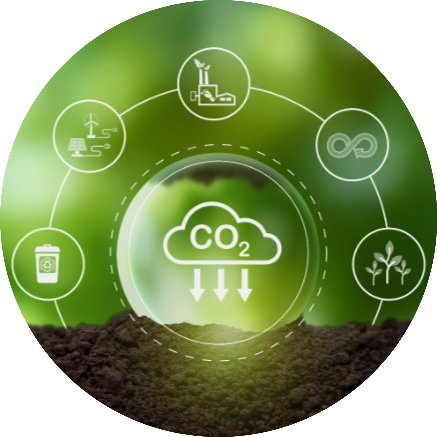
Reducing the quantity of carbon, primarily carbon dioxide (CO2), released into the atmosphere is known as decarbonization. Its goal is to transition to a low-emission, energy-efficient global economy in order to become carbon neutral. Researchers will discuss what they discovered in order to address this main concern.

Sustainability, social responsibility, and good governance are topics that are becoming more and more significant in the business sector. The Environmental, Social, and Governance (ESG) framework has emerged as a crucial tool for evaluating and handling these concerns. Researchers on this Thematic Track will present their findings.
Natural Based Solutions (NBS)
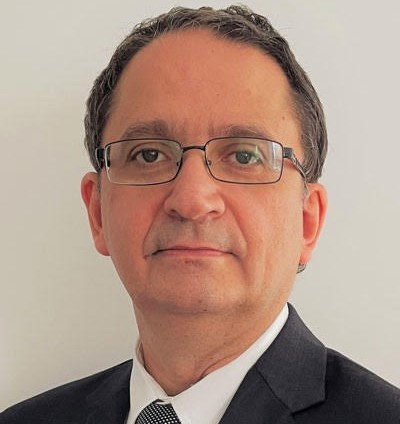
Greenhouse Gas Technologies (GHG)
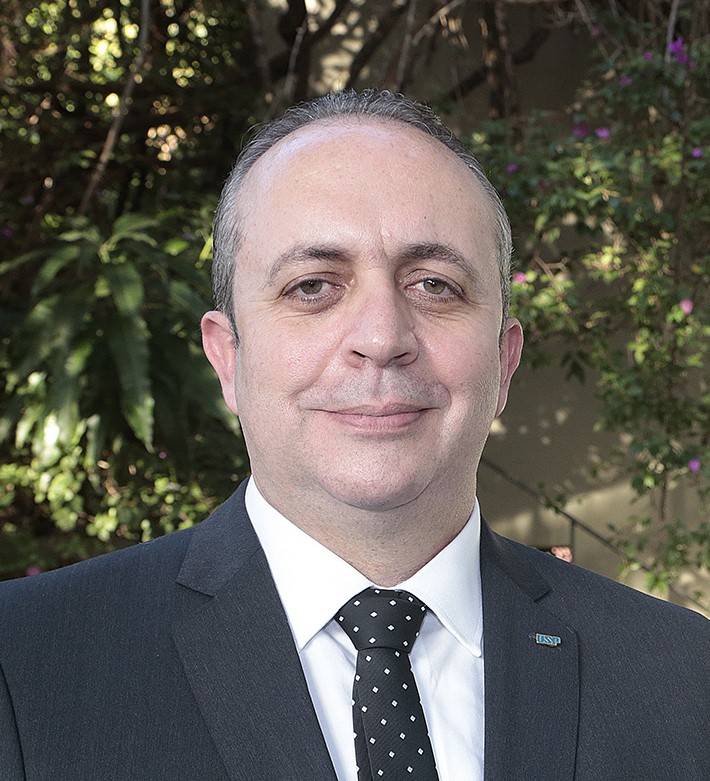
Bioenergy with Carbon Capture Utilization and Storage (BECCUS)
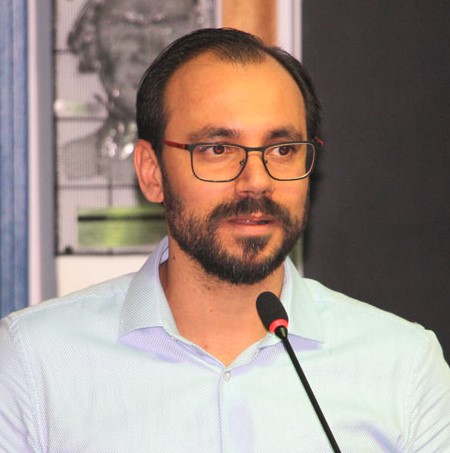
Carbon Capture Utilization and Storage (CCUS)
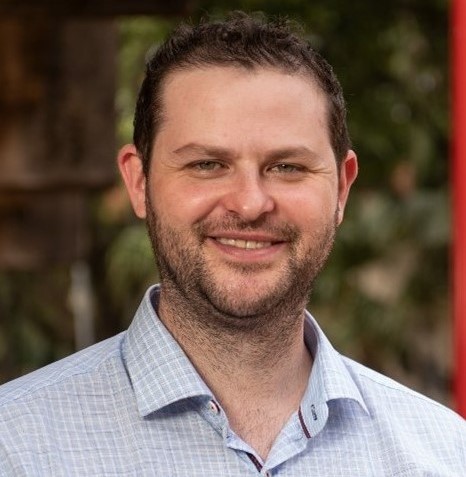
Nature Based Solutions (NBS)
Carbon Capture Utilization and Storage (CCUS)
Carbon Credits & Economics
Full professor at the Institute of Energy and Environment (IEE) at University of São Paulo (USP)
Environmental & Social & Gender
Standardization, Regulation, Social Perception & Acceptance
Power & Storage
Power & Storage
Natural Based Solutions (NBS)
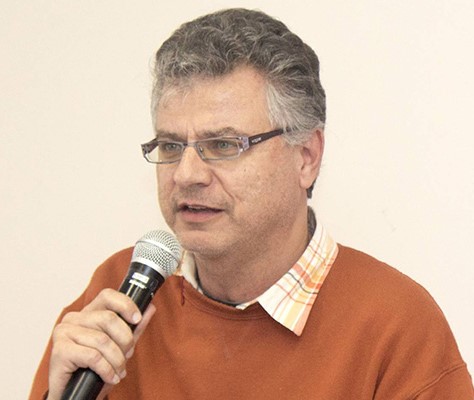
Standardization, Regulation, Social Perception & Acceptance

Greenhouse Gas Technologies (GHG)
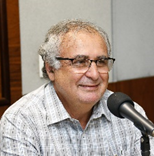
Power & Storage
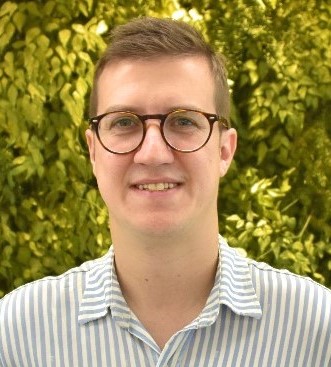
Greenhouse Gas Technologies (GHG)
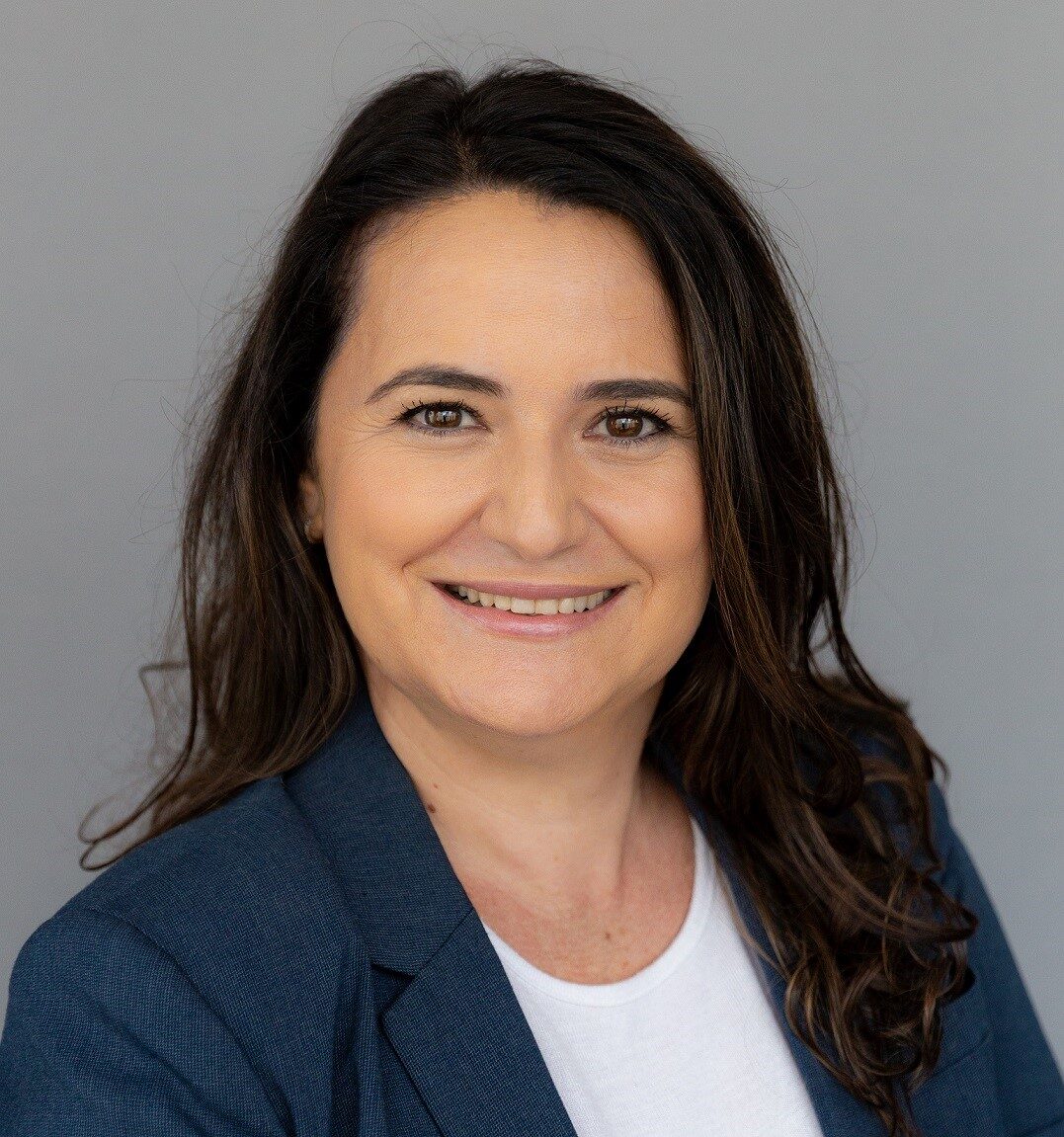
Carbon Capture Utilization and Storage (CCUS)
Bioenergy with Carbon Capture Utilization and Storage (BECCUS)

Gerente de Comunicación y Difusión del Conocimiento - RCGI-USP.

Doctorando en la Escuela Politécnica de la Universidad de São Paulo (POLI-USP) e investigador en el Research Centre for Greenhouse Gas Innovation (RCGI-USP).

Doctor en Ingeniería Mecánica (Energía y Fluidos), Magíster y MBA por la Universidad de São Paulo. Ingeniero Mecánico de la Universidad Nacional de Colombia - Medellín. Actualmente es investigador del Grupo de Investigación en Bioenergía (GBIO) y del Centro de Investigación para la Innovación en Gases de Efecto Invernadero (RCGI).

Cursando la graduación en Ingenieria de Producción por la Escuela Politécnica de la Universidad de San Pablo (Poli-USP) e investigador en el Research Centre for Greenhouse Gas Innovation (RCGI).

Investigador postdoctoral en la Escuela Politécnica de la Universidad de São Paulo e investigador asociado en el Research Centre for Greenhouse Gas Innovation (RCGI-USP) en el programa del Núcleo de Innovación de Sistemas de Energía (InnovaPower).

Doctoranda en la Escuela Politécnica de la Universidad de São Paulo (EPUSP) e investigadora asociada al Research Centre for Greenhouse Gas Innovation (RCGI-USP).

Analista de Eventos - RCGI-USP.

Candidato a doctorado en el Laboratorio de Fenómenos de Superficie de la Escuela Politécnica de la Universidad de São Paulo (USP) y participa del "PROYECTO 65" del Centro de Investigación para la Innovación en Gases de Efecto Invernadero (RCGI).

Estudiante de Matemáticas en la USP e investigadora de Iniciación Científica.

Doctor, actualmente es profesor asistente en la Universidad de São Paulo en el Departamento de Mecatrónica y Sistemas Mecánicos.

Ingeniera forestal y Máster en Ciencia Forestal (UFV), es estudiante de doctorado en el Instituto de Energía y Ambiente de la Universidad de São Paulo (IEE-USP) y investigadora asociada al Grupo de Investigación en Bioenergía (GBio).

ingeniera naval, licenciada por la USP y con experiencia en mantenimiento de buques y proyectos marítimos, además de haber operado simulaciones de maniobras fluviales en el IPT. Pasó a la carrera académica y participa en investigaciones en NDF, TPN y RouteLab, ambos laboratorios del PNV, Departamento de Ingeniería Naval del POLI USP.
Investigadora postdoctoral IEE/USP y RCGI-USP.

Investigadora de posdoctorado en el Instituto de Energía y Ambiente de la Universidad de São Paulo (IEE-USP) e investigadora asociada al Grupo de Investigación en Bioenergía (GBio) y al Centro de Investigación para Innovación de Gases de Efecto Invernadero (RCGI-USP).

Chemical Engineering student at USP, Scientific Initiation under the supervision of Professor Daniela Damasceno (Department of Mechatronics Engineering - RCGI - USP)

Since June 2023, holds a postdoctoral position at the Department of Mechanical Engineering at the Polytechnic School of the University of São Paulo, where conducts research at the Research Centre for Greenhouse Gas Innovation (RCGI).

Estudiante de máster en el Instituto de Energía y Medio Ambiente de la Universidad de São Paulo (IEE-USP) y becaria de investigación en el Centro de Investigación para la Innovación en Gases de Efecto Invernadero (RCGI-USP).

Investigadora postdoctoral en el Instituto de Energía y Medio Ambiente de la Universidad de São Paulo (IEE-USP) e investigadora asociada en el Centro de Innovación en Gases de Efecto Invernadero (RCGI-USP).
Director of Human Resources and Institutional Communication at RCGI
Deputy Coordinator of the project “Social Perception and Science Diplomacy for the Technology Transition towards a Low-Carbon Society” at RCGI
Since 2016 serves as Director of Human Resources and Leadership Management for the RCGI – Research Centre for Gas Innovation located at the Polytechnic School of the University of São Paulo (USP), funded by FAPESP (São Paulo State Funding Agency) and Shell Brasil. In 2021 she became the deputy coordinator of the project “Social Perception and Science Diplomacy in the Technology Transition towards a Low-Carbon Society”. And in 2023, after concluding her PhD, she assumed the Directory of Institutional Communication and Human Resources. She has a degree in Psychology from the University of São Paulo (USP), a post-graduation in Administration from Fundação Getúlio Vargas (FGV), a master’s in Social Psychology from Pontificia Universidade Católica (PUC-SP) and PhD in Social Psychology from the University of São Paulo (USP), with a year as researcher at Imperial College London. Before, developed approximately 18 years of experience in companies as Unilever, Andersen Consulting (Accenture), Chase Manhattan Bank (JP Morgan Chase), Banco Itaú, and Grupo VR (Sodexo), growing in her career from analyst to director. Worked in Human Resources and Change Management consulting for more than 15 years, focused on Coaching, Career Management, Leadership and Team Development, Mentoring Programs, Change Management and Organisational Culture, among others. Serves as a Visiting Professor at Fundação Getúlio Vargas (FGV) for the post-graduation program since 2009.
Low-Carbon Technology Manager – Shell.
Alexandre Breda joined Shell Brazil in December 2013; he holds a B.Sc. degree in Mechanical Engineering from Unicamp (University of Campinas) with a MBA degree in Energy from USP (University of Sao Paulo).
Alexandre has 23 years of experience in energy companies with a solid experience in innovation, energy transition, R&D and climate change.
Currently, he is the Manager for Low-Carbon & Energy Transition Technology responsible for a portfolio including NBS (nature-based solutions), CCUS (carbon capture, utilization and storage) and renewables (solar, sind, batteries and hydrogen).
Executive Director at ABRINSTAL & CEO at Newen Consulting.
He graduated in Electrical Engineering from Poli USP (1985).
He holds a MBA in Knowledge, Technology and Innovation from FEA USP (2001), a master in Energy from the IEE USP Interunit Program (2006). He holds a Ph.D. in Sciences from USP (2012). Postdoctoral student at USP (in progress). He is currently director of Newen Engenharia Consultiva and Executive Director of the Brazilian Association for Conformity and Efficiency of Installations – ABRINSTAL. He has experience in the area of Strategic Management (strategic and operational planning, process mapping, innovation and competitiveness) and Technological Management, with specialization in the area of quality infrastructure and basic industrial technology (regulation, assessment of conformity of products, processes and services, innovation and technological development systems). He is coordinator of research projects in Climate Change within the scope of the Research Center for Gas Innovation – RCGI and worked as an energy consultant for the United Nations Industrial Development Organization – UNIDO. He works mainly on the following topics: Climate Change, Energy Management, Energy Economics, Process and Organization Management, Conformity Assessment, Public Policies.
RCGI’ Shell Brasil Executive Committee Representative
Camila has more than 20 years of experience in Oil and Gas Industry, working in applied research for metallic and non-metallic materials, project management, market strategy and business development in companies like Evonik, TechnipFMC, Vallourec and Petrobras. Working at Shell since 2020, her current role is Technology Project Lead, managing R&D projects in Low-Carbon Energy platform, aiming the growth of CCUS technology solutions.
Camila started her career as chemistry technician, and obtained her Master’s in Chemical Engineering by Federal University of Minas Gerais, MBA in Marketing&Sales by University of Mannheim (Germany) and she is PhD candidate in Metallurgical and Materials Engineering at Federal University of Rio de Janeiro.
RCGI Director of the Nature Based Solutions (NBS) Programme
He holds a degree in Agricultural Engineering from the University of São Paulo (1997), a master’s degree in Soils and Plant Nutrition from the University of São Paulo (1999), and a PhD in Environmental Science from the University of São Paulo (2003).
He is currently a Full Professor in the Department of Soil Science at the Luiz de Queiroz College of Agriculture, University of São Paulo, working mainly on topics related to Soil Organic Matter, Global Warming and Climate Change, Agriculture and the Carbon Credit Market, Mathematical Modeling , geostatistics and geoprocessing. CNPq Productivity Scholarship and Affiliated Member of the Brazilian Academy of Sciences.
Reservas Votorantim, Excecutive Director
Soon
Instituto Combustível Legal, CEO
Soon
Casa dos Ventos, Leader in Business Development in Decarbonization and Molecules Verdes
Soon
Soon
Agroícone, Senior Researcher
Soon
Founder and CTO of Carbonic.
Graduated in BSc Chemistry from Universidade de São Paulo (2014), with a year abroad at the University of York, in the MSc Green Chemistry and Sustainable Industrial Technologies (2012/2013). PhD in Chemistry obtained in the University of Sao Paulo (2021) in the area of heterogeneous catalysis for the hydrogenation of CO2 to methanol, particularly over rhenium catalysts, at IQ-USP under supervision of Prof Pedro Vidinha. Currently, she is still in the group of Prof. Pedro Vidinha as a postdoctoral researcher associate working in the hydrogenation of CO2 to alcohol, as part of a start up called Carbonic.
General Manager, Technology & Innovation, Shell Brasil
Senior Executive in the energy business for more than 30 years, Olivier is currently the General Manager, Technology and Innovation in Shell Brasil. Prior to this, he occupied senior positions in BG Group, a UK Independent, as Corporate Chief Technology Officer and BG Brasil Chief Operating Officer.
Since 1990, Olivier has acquired a wide experience in the Oil & Gas and Energy business with Shell International, when he managed key assets worldwide, in UK, Oman, Malaysia and Brazil. More recently, he has been leading the Energy Transition challenges from the R&D and Innovation fronts. A quote he particularly likes, from Steve Jobs: “It doesn't make sense to hire smart people and then tell them what to do. We hire smart people so they can tell us what to do.”.
Olivier is married to Anne-Catherine, with 3 grown-up graduate children. He holds an MSc and PhD in Applied Mathematics from the University of Louvain, Belgium, and Executive Management certificates from Wharton, USA and Cranfield, UK.
3M, President
Soon
USP – RCGI, Director of Technology Transfer and Innovation
Renato Picelli is a mechanical engineer holding a PhD in Computational Mechanics from the State University of Campinas (Unicamp, 2015), having completed a 12-month research exchange at Delft University of Technology (TU Delft, Netherlands). He worked as a postdoctoral researcher at Cardiff University (UK) and as a visiting researcher at RMIT University (Australia) and the University of California, San Diego (USA). In 2018, he joined the Polytechnic School of the University of São Paulo (EP-USP) as a fellow under FAPESP’s Young Researchers program and became an Assistant Professor in the Department of Naval Architecture and Ocean Engineering (PNV) in 2022.
He leads the Offshore Technology and Topology Optimization laboratory (OTTO lab). The group focuses on parametric, shape, and topology optimization for multiphysics problems, with expertise in fluid-structure and acoustic-structure interaction, as well as mechanical stress and fluid dynamics problems. Applications include the design of ships and offshore structures, energy systems (such as fuel cells), and pneumatic machines for mitigating CO2 and methane emissions. Prof. Picelli is active in the RCGI’s Greenhouse Gas (GHG) program and serves as the Director of Technology Transfer and Innovation. He maintains close collaborations with the following institutions: TU Delft (Netherlands), Kyoto University (Japan), Karlstad University (Sweden), and RMIT University (Australia).
Prof. Picelli has authored or co-authored over 40 articles published in indexed, peer-reviewed scientific journals. He has coordinated several research projects funded by FAPESP. Currently, he is responsible for the Engineering Optimization courses at both the undergraduate and graduate levels within the PNV program. He is a member of the Early Career Special Committee of the International Society for Structural and Multidisciplinary Optimization (ISSMO).
USP – RCGI, Manager of Technology Transfer and Innovation
Soon
Raizen, Consultant
Soon
Braskem, CVC and OXYGEN, CEO
Soon
USP – ESALQ, Full Professor
Soon
USP – RCGI, Full professor at the Institute of Energy and Environment (IEE)
Soon
ANP – National Agency for Petroleum, Natural Gas and Biofuels , Specialist in Petroleum, Natural Gas and Biofuels Regulation
Soon
PhD in Mechanical Engineering (Energy and Fluids), Master’s degree, and MBA from the University of São Paulo.
USP Polytechnic School, Professor and Consultant
Deputy Scientific Director & Director of Greenhouses Gases (GHG) Programme, RCGI.
He began his work as Professor in the Department of Mechatronics and Mechanical Systems at the Polytechnic School of the University of São Paulo (EPUSP), Brazil, in 1998. He was promoted to Associate Professor in 2003 and Professor in 2005. He is currently a researcher of CNPq 1A level in Brazil. He obtained Bachelor and master degree in Mechanical Engineering from EPUSP in 1990 and 1993, respectively, and the Ph.D. degree in Mechanical Engineering from The University of Michigan – Ann Arbor, USA, in 1998. During his Ph.D., he received two awards: Distinguished Achievement Award and Ivor K. McIvor Award. The first award is given in recognition of excellence and academic staff, and the latter in recognition of performance in research.
He specializes in Computational Mechanics, particularly in the application of finite element and topology optimization methods in smart structures and materials, such as piezoelectric actuators and sensors, piezocomposite materials (including functional gradient materials – FGM), energy harvesting devices, microelectromechanical systems (MEMS), and flow machines. He was invited as visiting professor at Kyoto University, Japan, in 2003, and University of Illinois at Urbana-Champaign, USA in 2003, 2004, 2006 and 2007. He has published articles in international journals of selective editorial policy, acted as reviewer of international journals, and international conferences, and as ad hoc consultant for international funding agencies such as NSF (USA), NRF (South Africa), and ISF (Israel). Author has participated regularly in symposia and conferences around the world, also with publication of articles. He has served as a member of the scientific committee, has organized oral sessions, and has given keynote lectures and plenary talks at several international conferences.
Author was the “Chair” of the congress “ISMM&FGM2014”, SP, Brazil. He participated as a panelist in the Panel of Experts for Proposals on the Mechanics of Materials (MoM-X) 2010 program of the NSF USA and was a voting member in the “Frontier Ideas” meeting panel to decide on potential topics for the ” Emerging Frontiers in Research and Innovation (EFRI-2011) “, USA. He is a member of the editorial board of the journal Mechanics Research Communications (MRC). In 2016, he was co-editor of the special edition “Recent Advances in Multiscale, Multifunctional and Functionally Graded Materials” of the MRC journal.
FIESP, Infrastructure Department Manager
Soon
Boticario, Senior Packaging Researcher
Soon
Brazilian Biorenewables National Laboratory (LNBR/CNPEM), Soil Scientist
Soon
MME – Ministry of Mines and Energy, Director of the Energy Transition Department
Soon
USP – RCGI, Director of Power Systems Innovation Hub – InnovaPower Programme, RCGI
Soon
Secretary of the Environment of the State of São Paulo (SEMIL), Undersecretary of Energy and Mining
Soon
SyraSolar, Managing Director, and USP- RCGI, Researcher
Soon
Deputy Director of the Carbon Capture and Utilization (CCU).
Current research interests are related to the valorization of carbon dioxide and biomass through the combination of different catalytic strategies in supercritical fluids.
RCGI – USP, Deputy Director of Power Systems Innovation – InnovaPower Hub
Soon
USP – POLI Visiting professor and USP – RCGI, Researcher
Soon
BP Bioenergy, Project Manager
Soon
USP, Professor at the Institute of Energy and Environment
Soon
Hyundai Motor Brasil, Head of New Hydrogen Businesses Central and South America
Soon
University of São Paulo (USP) Dean
Soon
FS Fueling Sustainability, Sustainability Manager
Soon
Shell Brasil, Energy Transition Program Manager
Soon
Natura, Head of Investment and KPTL, Climate
Soon
ANEEL – Agência Nacional de Energia Elétrica, Regulatory Specialist
Soon
EPE, Biofuels Analyst
Soon
Director of the Advocacy Programme, RCGI.
He holds a degree in Naval and Oceanic Engineering from the University of São Paulo (1979), a master’s degree in Naval and Oceanic Engineering – Yokohama National University (1982) and a doctorate in Naval and Oceanic Engineering from the University of Tokyo (The University of Tokyo -1985). He is currently a full professor at the University of São Paulo. The specialization was in the area of Naval and Oceanic Engineering, with an emphasis on Hydrodynamics and Design of Ships and Oceanic Systems, but the work has been the integration of diverse engineering knowledge and basic sciences as founder of the NUMERICAL PROOF TANK (TPN), mainly on the following topics: Numerical Simulation of Ocean Systems Dynamics, Development of New Ocean Systems. Recently, the emphasis is on Sustainable Ocean Development and Digital Transformation
CCS Brasil, Cofounder and Director
Soon
TotalEnergies, Power System Lead
Soon
Compass, Executive Manager Sustainable Development and External Communication
Soon
FAPESP, Innovation Area Manager, and FEA-USP, Finance Professor
Soon
Director of the Bioenergy with Carbon Capture and Storage (BECCS) Programme, RCGI.
Marcos Buckeridge is plant biologist who has spent 20 years working at the Botanical Institute of São Paulo with native Neotropical species. During his masters and Ph.D. he worked with cell wall polysaccharides in plants and in 1995 established a line of research focused on the comprehension of the physiological and cellular mechanisms involved in seedling establishment in tropical biomes as well as the development of biotechnological tools to help the sustainable use of biodiversity. More than 80 publications were produced following these lines of research.
With the increasing importance of the impact of Global Climatic Changes in the world, Dr. Buckeridge pioneered studies that try to understand how the rain forest, including Atlantic and Amazonian species, are responding to the increasing carbon dioxide concentration in the atmosphere.
More recently, his research group added another focus, which is to understand how the sugar cane plant will respond to the climatic changes. This is important because sugarcane is now one of the most important crops in Brazil, being responsible for the production of ethanol as a fuel. Dr. Buckeridge moved to the University of São Paulo in 2006 and from 2009 to 2012 shared this position with the Scientific Directory of the Brazilian Bioethanol Science and Technology Laboratory at Campinas.
He is also the actual coordinator of the National Institute of Science and Technology of Bioethanol (INCT do Bioetanol) a virtual organization that congregates 31 laboratories from 6 states of Brazil working on bioenergy. He has been president of the Botanical Society of São Paulo from 2001 to 2005 and is one of the lead authors for the next report of the Intergovernmental Panel of Climatic Changes (IPCC) to be presented in 2014. Presently, Dr. Buckeridge is a communicating editor for Trees:structure and function (Springer), Bioenergy Research (Springer), Global Change Biology Bioenergy and the Australian Journal of Botany.
Buckeridge has been President of the Academy of Sciences of the State of São Paulo from 2015 to 2019.
BNDS – National Bank for Economic and Social Development, Economist
Soon
FAPESP, President
Soon
Toyota, Corporate Communication & ESG Director
Soon
Engineer and Researcher| CCS – Carbon Capture and Storage | CO2 Storage | Carbon Management | Decarbonization | Sustainable Development.
Petroleum Engineer with a Master’s in Energy from the University of São Paulo (USP) and an exchange stint at the IFP School in France in Petroleum Economics and Management. She is a PhD candidate in Mechanical Engineering of Energy and Fluids at USP, researching geological carbon storage.
Co-founder and Director of the non-profit CCS Brasil, she also serves as Executive Vice President of Manacá CCS and as a Researcher at the Research Centre For Greenhouse Gas Innovation (RCGI).
Additionally, she is a co-founder and board member of the Society for Low Carbon Technologies (SFLCT). Her professional background spans consulting and research in the Energy sector, emphasizing CO2 emission reduction and the Carbon Market, and she educates on energy transition topics.
Deputy Director of the Advocacy RCGI.
Commander of the Order of Rio Branco (Ministry of Foreign Affairs – Itamaraty). Linneborn Prize 2023 (European Biomass Conference and Exhibition 2023, Bologna, Italy) for the researches on Bioenergy. Chemical Engineering (1972), Master degree (1992) and PhD (1999) in Energy by the Graduate Program in Energy (PPGE), Institute of Energy and Environment (IEE), University of São Paulo (USP). She is a lecturer and thesis advisor at PPGE/IEE/USP and at the Post Graduate Program in Bioenergy USP / UNICAMP / UNESP. She is also the coordinator of the Research Group on Bioenergy (www.iee.usp.br/gbio) of IEE/USP.
In addition, she is one of the coordinators of the Thematic Axes Program – Energy of USP. Reviewer at several scientific journals, such as Energy Policy, Journal of Cleaner Production, Clean Technology and Environmental Policy, Biomass and Bioenergy and Energy for Sustainable Development, among others. Bioenergy Editor at Renewable Bioenergy and Sustainable Energy Reviews. Principal Investigator (PI) and Deputy Director for BECCS Program at RCGI/FAPESP/SHELL.
Natural Based Solutions (NBS)
Agricultural Engineer from the Federal University of Ceara (UFC) Master’s degree in Agronomy (Soils and Plant Nutrition) from UFC. Ph.D. from ESALQ-USP with a sandwich doctorate at Colorado State University (2009). Post-doctorate in Sciences from the Center for Nuclear Energy in Agriculture (CENA-USP). He is currently a professor at the Federal Institute of Alagoas (IFAL), teaching the technical course on environment and the technological course on Environmental Management. Permanent professor of the Stricto Sensu Postgraduate Program in Agronomy – Plant Production at the Federal University of Alagoas, and of the Environmental Technologies Program at the Federal Institute of Alagoas. He has experience in the area of Agronomy, with an emphasis on soil organic matter and the environment, working mainly on the following topics: carbon sequestration, greenhouse gas inventory, and uncertainty analysis. He was the technical coordinator of the Agriculture Sector in the Fourth Brazilian Greenhouse Gas Emission Inventory. Currently, he is the coordinator of the Climate Change and Agriculture Sub-network of Rede Clima (MCTI).
es doctorando en la Escuela Politécnica de la Universidad de São Paulo (POLI-USP) y investigador en el Research Centre for Greenhouse Gas Innovation (RCGI-USP).
Tiene un título en Ingeniería Mecánica y una maestría en Ciencia e Ingeniería de Materiales por la Universidad Federal de Piauí (UFPI). Con una sólida formación académica en simulación numérica, Anderson forma parte de un equipo interdisciplinario que amplía la aplicación de la optimización topológica a problemas industriales. Su línea de investigación se centra en el desarrollo de herramientas computacionales para mejorar el rendimiento de los componentes estructurales de las máquinas neumáticas, con el objetivo de mitigar las emisiones de Gases de Efecto Invernadero (GEI).
PhD en Ingeniería Mecánica (Energía y Fluidos), con Maestría y MBA de la Universidad de São Paulo.
Ingeniero Mecánico de la Universidad Nacional de Colombia – Medellín. Actualmente, es investigador en el Grupo de Investigación en Bioenergía (GBIO) y en el Centro de Pesquisa para Inovação em Gases de Efeito Estufa (RCGI).
es graduando en Ingeniería Industrial por la Escola Politécnica de la Universidad de São Paulo (Poli-USP). En el Research Centre for Greenhouse Gas Innovation (RCGI).
Trabaja en proyectos de Innovación & Transferencia de Tecnología, contribuyendo a la estructuración e implementación de un entorno para apoyar el desarrollo de deep techs. También participó en Investigación sobre la “Percepción Social” de las Emergencias Climáticas y las transiciones tecnológicas hacia una Sociedad baja en carbono. Además de los temas de Energía, es un entusiasta de la Educación – como vector de transformación social –, formando parte del STEAM Lab del Centro de Innovación de la Universidad de São Paulo (InovaUSP).
es investigador postdoctoral en la Escuela Politécnica de la Universidad de São Paulo e investigador asociado en el Research Centre for Greenhouse Gas Innovation (RCGI-USP) en el programa del Núcleo de Innovación de Sistemas de Energía (InnovaPower).
Es graduado en Ingeniería Eléctrica por el Centro Universitario de FEI, con un máster y doctorado en la Escuela Politécnica de la USP, y realizó una estancia de investigación en el extranjero en la Universidad de Aalborg durante su doctorado. Giovani se dedica a la investigación en el área de descarbonización del sector marítimo, el aumento de la penetración de fuentes renovables en el sistema interconectado brasileño, y las aplicaciones de sistemas de almacenamiento y de celdas de combustible.
es doctoranda en la Escuela Politécnica de la Universidad de São Paulo (EPUSP) e investigadora asociada al Research Centre for Greenhouse Gas Innovation (RCGI-USP). Graduada en Ingeniería Eléctrica por la Universidad Estatal del Oeste de Paraná (Unioeste) y máster en Ingeniería Eléctrica y Computación por la misma institución
Liciane posee una amplia formación en análisis dinámico de sistemas de potencia, integración de fuentes renovables de energía y generación distribuida. Actualmente, se dedica a la investigación en energía eólica, con un enfoque en instalaciones offshore como alternativa para la descarbonización de plataformas petrolíferas, además de estudios sobre sistemas offshore de transmisión de energía.
Analista de Eventos – RCGI-USP.
Soon.
realizó su doctorado en el Laboratorio de Fenómenos de Superficie de la Escuela Politécnica de la Universidad de São Paulo (USP) y participa en el «PROJECT 65» del Centro de Innovación en Gases de Efecto Invernadero (RCGI), que tiene como objetivo desarrollar sellos laberinto inteligentes para mitigar las emisiones de GEI en máquinas neumáticas.
Durante su maestría en Ingeniería Mecánica en la Universidad Estatal de Campinas (UNICAMP), André investigó la influencia de la microestructura en los procesos de micromecanizado, utilizando análisis de elementos finitos y procesamiento de imágenes. También realizó investigaciones en la University of Illinois at Urbana-Champaign (UIUC), donde se centró en la modelización física de procesos de micromecanizado y el impacto de las capas de manufactura aditiva en los procesos de mecanizado. Se graduó en Ingeniería Mecánica y en Ciencia y Tecnología por la Universidad Federal de Río Grande del Norte (UFRN) y tiene amplia experiencia en tribología, simulación numérica (FEA/CFD) y desarrollo de proyectos. Además, es fundador de PoliEnergy Soluções Tecnológicas, donde desarrolla películas delgadas para mejorar la eficiencia de las turbinas eólicas. Su investigación y emprendimiento buscan soluciones innovadoras que promuevan la eficiencia energética y la reducción de emisiones de carbono, alineando sus actividades con los objetivos del RCGI.
es estudiante de Licenciatura en Matemáticas en la USP. Involucrada en investigación científica desde la escuela secundaria, actualmente desarrolla un proyecto de Iniciación Científica en el área de Nanoingeniería bajo la supervisión de la profesora Daniela Damasceno (Departamento de Ingeniería Mecatrónica – RCGI – USP).
Recientemente, tuvo un proyecto aprobado para presentación en la COP 30, titulado «Análisis de la oferta de alimentos mínimamente procesados y ultraprocesados en la región de Vila Pirituba,» coordinado por el profesor William Rosseti, del IFSP, en el área de Cadena de Suministro.
PhD, é atualmente professora assistente na Universidade de São Paulo, no Departamento de Mecatrônica e Sistemas Mecânicos.
É atualmente professora assistente na Universidade de São Paulo, no Departamento de Mecatrônica e Sistemas Mecânicos. Seu projeto de pesquisa foca em estratégias de nanoengenharia para otimização de componentes de células a combustível, tecnologias de membranas e nanotecnologia. Seu trabalho enfatiza nanomecânica, nanomateriais e a transição energética, destacando sua expertise no design computacional para separação de gases de efeito estufa e na mecânica de nanomateriais.
Soon
es ingeniera naval, licenciada por la USP y con experiencia en mantenimiento de buques y proyectos marítimos, además de haber operado simulaciones de maniobras fluviales en el IPT.
Pasó a la carrera académica y participa en investigaciones en NDF, TPN y RouteLab, ambos laboratorios del PNV, Departamento de Ingeniería Naval del POLI USP.
Julia Primo é estudante de Engenharia Química pela USP. Durante o ensino médio, cursou técnico em Informática integrado, adquirindo experiência com programação e banco de dados. Atualmente, desenvolve um projeto de Iniciação Científica em NanoEngenharia, intitulado «Introdução à Nanongenharia», sob orientação da professora Daniela Damasceno (Departamento de Engenharia Mecatrônica – RCGI – USP). O projeto explora aplicações da nanotecnologia em soluções de engenharia, permitindo que integre sua formação em programação com seu interesse pela engenharia e sustentabilidade.
Obteve a primeira graduação em Bacharel em Ciência e Tecnologia (2016). segunda graduação em Engenharia Aeroespacial (2017), ambas pela Universidade Federal de Santa Catarina. Realizou doutorado sanduíche em Engenharia Mecânica na Universidade de Tóquio (2019) e doutorado em Engenharia Mecânica pela Universidade de São Paulo com bolsa FAPESP (2023). Desde junho de 2023, exerce o cargo de pós-doutoranda no Departamento de Engenharia Mecânica da Escola Politécnica da Universidade de São Paulo, onde desenvolve pesquisas no Centro de Pesquisa para Inovação em Gases de Efeito Estufa (RCGI).
es estudiante de máster en el Instituto de Energía y Medio Ambiente de la Universidad de São Paulo (IEE-USP) y becaria de investigación en el Centro de Investigación para la Innovación en Gases de Efecto Invernadero (RCGI-USP).
Licenciada en Ingeniería Química por la misma institución, Isabella centra su investigación en las energías renovables, con énfasis en la optimización y dimensionamiento de plantas híbridas eólico-fotovoltaicas y la evaluación del potencial de producción de hidrógeno verde en Brasil. Su principal objetivo es contribuir a una transición energética eficiente.
Con una sólida formación académica en ingeniería eléctrica, Walquiria se dedica a la investigación interdisciplinaria centrada en fuentes de energía renovables, sistemas eléctricos, y la operación y planificación de redes eléctricas. Su investigación se enfoca en la integración y evaluación de tecnologías emergentes que puedan minimizar los impactos del cambio climático y optimizar los recursos energéticos. Al aplicar conocimientos científicos en proyectos prácticos, busca facilitar la transición hacia un modelo energético más sostenible y eficiente, contribuyendo al desarrollo de soluciones innovadoras para un futuro resiliente y bajo en carbono.